
How to Tell a Supplier's True Machining Capability from a Quote
A quotation is the first piece of written evidence for assessing a CNC machining supplier's real capability. When a quote clearly specifies the machining method, process breakdown, inspection items, and delivery commitments, buyers can infer whether the supplier has the corresponding equipment and workflow. Conversely, a quote that only lists unit price and total price often indicates that the machining method has been simplified, processes outsourced, or inspections omitted. For overseas buyers, learning to read a quotation is more effective at preventing quality and delivery risks than simply comparing prices.
Key Takeaways
Quote Sheet Fields Reflect a Machining Facility's True Capabilities
Fields such as machining methods, process breakdown, inspection items, and delivery commitments correspond to actual equipment and workflows. Their completeness is a reflection of management maturity.
Four Types of Critical Information Must Be Clearly Indicated
Machining methods and equipment correspondence, process breakdown and operation descriptions, material and surface treatment notes, and inspection items with delivery timelines are all indispensable.
Mill-Turn and 5-Axis Machining Can Be Traced
Descriptions such as single clamping, reduced secondary positioning, and multi-angle hole positions can serve as indirect evidence of high-end capacity and corresponding equipment.
Cross-Comparison Should Establish a Consistent Benchmark
Use a standardized evaluation form to fill in each quote item by item, and identify the machining facility that meets your needs across the three dimensions of machining methods, processes, and inspection.
Why Does a Quotation Reflect a Machining Supplier's True Capability?
A quotation reflects a machining supplier's true capability because every field corresponds to an actual investment. The machining method field reveals whether the supplier plans to use CNC turning, milling, mill-turn, or Swiss-type lathes, which directly determines whether a workpiece is completed in one setup or requires multiple clamping operations. The process breakdown field shows whether roughing, semi-finishing, and finishing are quoted separately; if they are combined into a single line, it often indicates insufficient process planning. The inspection items field indicates whether incoming inspection, in-process inspection, and final pre-shipment inspection are implemented—these three stages of inspection are the foundation of consistent quality. The delivery commitment field distinguishes prototype lead time from mass production lead time; if the gap between the two is too large or they are not listed separately, it usually reflects a lack of production scheduling experience. For buyers, the completeness of a quotation is itself a reflection of a machining supplier's management maturity.
Four Key Types of Information That Must Appear on a Quotation
Machining Method and Equipment Correspondence
Clearly specify CNC turning, milling, mill-turn, or Swiss-type lathe, and note whether 3-axis to 5-axis machines are used, to avoid vague descriptions of the machining method.
Process Breakdown and Operation Description
Roughing, semi-finishing, finishing, and deburring should be quoted as separate line items, allowing buyers to assess whether the supplier understands the machining difficulty of the part based on the number of operations.
Material and Surface Treatment Notes
Specify material grades such as aluminum alloy, stainless steel, carbon steel, or brass/copper, and indicate whether anodizing, sandblasting, or other post-treatment is included.
Inspection Items and Tiered Delivery Lead Times
List incoming, in-process, and pre-shipment inspection content, and distinguish prototype lead time from mass production lead time as the basis for subsequent acceptance.
What Clues Do Mill-Turn and Five-Axis Machining Leave on a Quotation?
Mill-turn and five-axis machining leave clear clues on a quotation, and buyers can infer whether a supplier has such advanced capacity from the details in the fields. Mill-turn is typically based on completing multi-face machining in a single setup, so if a quotation notes reduced secondary positioning or combined turning and milling operations, it indicates the supplier has corresponding mill-turn machines. Five-axis machining is reflected in descriptions of multi-angle holes, inclined surfaces, or curved surfaces formed in one operation; if a quotation only mentions "milling" without referencing five-axis, buyers should proactively ask whether 3-axis indexing is used as a substitute, as this directly affects precision and lead time. For Swiss-type lathes, if a quotation for slender shaft parts notes one-pass forming and high material utilization, it indicates the supplier has Swiss-type machines such as Star; if quoted only as general turning, buyers should assess whether additional straightening operations will be needed due to deformation. For overseas buyers, these fields serve as indirect evidence for determining whether a machining supplier has corresponding equipment such as BROTHER or TAKISAWA.

What problems can arise later if the material field is not specified clearly?
If the material field is not clearly specified on the quotation, problems are most likely to arise in both quality and cost. The cutting parameters for aluminum alloys and stainless steel differ greatly; if the quotation only states "metal parts" without specifying aluminum alloy, stainless steel, carbon steel, or brass/copper, the machining supplier may quote based on the lowest-cost material and then deliver parts made from a different grade. Failure to specify the material grade can also lead to disputes over surface treatment, for example, anodizing results can vary in color between 6061 and 2011 aluminum alloys on the same part. For OEM parts supply and Tier-1 suppliers, material traceability is a basic requirement of a quality system. If the quotation does not cover this, it suggests that the supplier may not have implemented grade verification during incoming inspection. Buyers should require that material specifications, surface roughness, and post-processing items be fully written into the quotation at the inquiry stage, to serve as the basis for subsequent acceptance and dispute resolution.
Is it sufficient to simply write "100% inspection" for the inspection process?
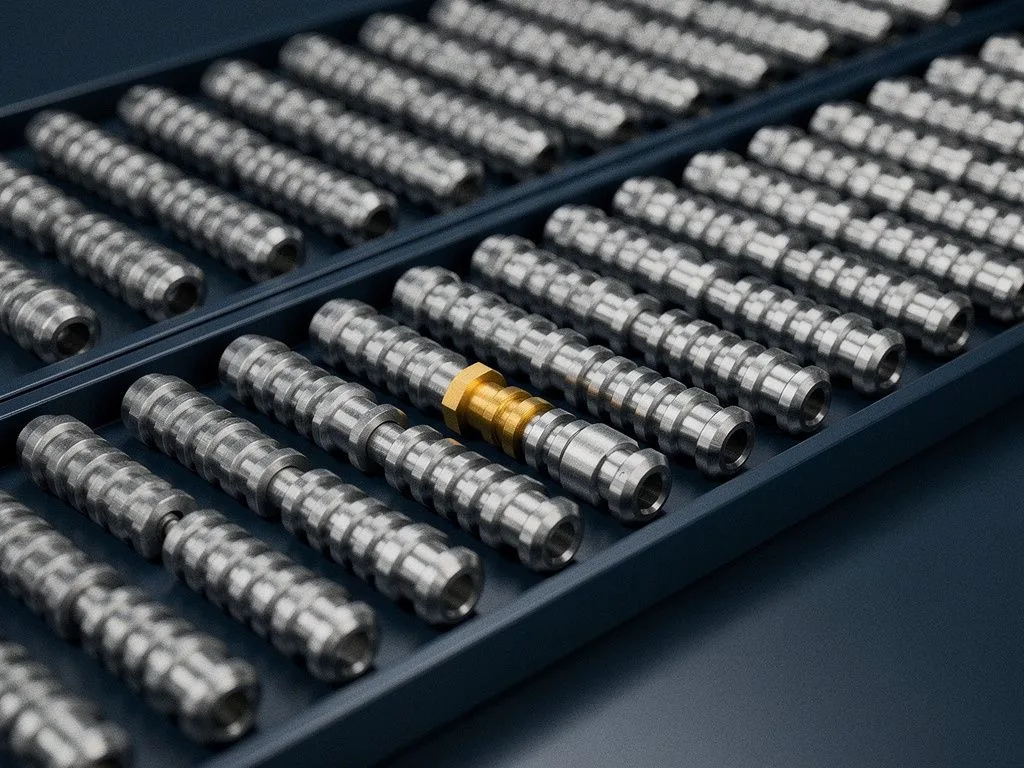
Simply writing "100% inspection" for the inspection process is not enough, because the definition and execution method of 100% inspection are what really matter. A complete quotation should distinguish three stages: incoming inspection, in-process inspection, and final inspection before shipment, and indicate the inspection items and sampling ratios for each stage. Incoming inspection covers material grade and dimensions, in-process inspection covers critical dimensions and tool wear, and final inspection before shipment covers full dimensions and appearance. If the quotation only states "final 100% inspection before shipment," it means there are no measurement checkpoints during the process, and quality abnormalities are often only discovered at the end, when the entire batch has already been machined. For trial development teams, in-process inspection is especially important because the trial stage requires rapid feedback on dimensional issues; without intermediate measurements, timely corrections cannot be made. Buyers can infer from the level of detail in the inspection field whether the machining supplier truly implements the three-stage inspection required by the ISO 9001:2015 quality system.

How should the delivery time field be read to avoid being misled?
The delivery time field must distinguish between trial production delivery time and mass production delivery time, as the production scheduling logic behind them is completely different. Trial production delivery time is usually calculated in working days and includes first article confirmation and measurement feedback time; mass production delivery time is calculated based on cycle time or batch capacity, and must reserve time for tool life and changeover. If the quotation mixes the two and gives only one delivery time figure, it is difficult for buyers to judge whether the supplier understands the difference between trial and mass production. If the delivery time field does not specify whether surface treatment and post-processing are included, it can also cause misunderstandings; for example, additional anodizing or sandblasting may add several working days. For OEM parts supply, delivery commitments should also include yield rate and replacement mechanisms. If the quotation does not mention these, buyers should proactively ask about the handling of defective parts and the replacement schedule, to avoid production line stoppages due to a single defective batch during mass production.
What should buyers proactively ask about when items are not listed on the quotation?
What is not listed on the quotation is often the key to the success or failure of the cooperation, and buyers should proactively ask about these items during the inquiry stage. First, whether tooling and fixture costs are included in the quotation, as CNC turning-milling and five-axis machining often incur additional costs due to complex fixtures. Second, the minimum order quantity for mass production and the maximum capacity per batch, as this directly relates to whether the supplier can handle mid- to long-term orders from Tier-1 suppliers. Third, the process for handling quality abnormalities, including the defective rate limit, correction schedule, and return/exchange mechanism. Fourth, the place of origin and shipping terms, such as whether shipment is from Taichung Port or Taoyuan Airport, and whether packaging and container loading services are provided. Fifth, the re-quotation mechanism after drawing changes, as trial production often involves process adjustments due to design modifications, and without clear agreements, cost disputes can easily arise. Although these fields may not appear on every quotation, the questions buyers ask can themselves test the supplier's response speed and professionalism.
How to Cross-Compare Machining Capabilities Using Quotations?
When cross-comparing the capabilities of different machining suppliers using their quotations, buyers should establish a consistent basis for comparison rather than focusing only on the total price. It is recommended to prepare a standardized evaluation form with fields covering machining methods, process breakdown, material specifications, inspection items, delivery lead time tiers, and additional costs, then fill in each supplier's quotation item by item. If one quotation clearly describes turning-milling combined machining while another only states "milling," it can be determined that the former has the corresponding machine tools while the latter may be outsourcing. If one quotation lists three-stage inspection in the inspection section while another only states "full inspection," it can be determined that the former has a more complete quality system. For slender shaft-type parts processed on Swiss-type lathes, if the quotation notes one-pass forming and material utilization rate, the buyer can confirm whether the supplier owns Swiss-type machines such as Star. The purpose of cross-comparison is not to find the cheapest supplier, but to identify those that meet requirements in the three dimensions of machining method, process, and inspection, and then select one with a reasonable price.
FAQ
What does it mean when a quote only lists unit price and total price?
If a quote only provides unit price and total price, it often means that the machining method has been simplified, processes are outsourced, or inspection is omitted. Buyers will find it difficult to determine whether the supplier has the corresponding equipment and workflows, leading to higher quality and delivery risks.
What problems can arise if the material field is not clearly specified?
If the material field is not clearly specified, the machining facility may quote based on the lowest-cost material but deliver with a different grade, resulting in mismatched cutting parameters and surface treatment disputes—for example, the anodizing color difference between 6061 and 2011 aluminum alloys.
Is it sufficient to simply state '100% inspection' for the inspection process?
No, the definition and execution method of 100% inspection are what matter. A complete quote should distinguish between incoming inspection, in-process inspection, and final inspection before shipment. If only final inspection is stated, it means there are no measurement checkpoints during the process, and quality issues are often only discovered at the end.
How should the delivery time field be read to avoid being misled?
The delivery time field must distinguish between prototype delivery time and mass production delivery time, as their scheduling logic differs. If they are mixed together or it is not specified whether surface treatment and post-processing are included, misunderstandings can easily occur—for example, additional anodizing or sandblasting may add several working days.
What should be asked about items not listed on the quote?
You should proactively ask whether tooling and fixture costs are included in the quote, the minimum order quantity for mass production and the maximum capacity per batch, the quality issue handling process, origin and shipping terms, as well as the re-quoting mechanism after drawing changes.
Send Your Part Drawings and Requirements to Yuan Shun Li
Provide 2D/3D drawings, material, batch size, and delivery schedule. Yuan Shun Li will reply with a complete quotation based on actual specifications, including machining methods, process breakdown, and inspection items, helping you understand the supplier's true machining capabilities during the inquiry stage.