ysl-cnc taichung-cluster-5

How does Taiwan CNC machining position itself relative to other Asian production bases?

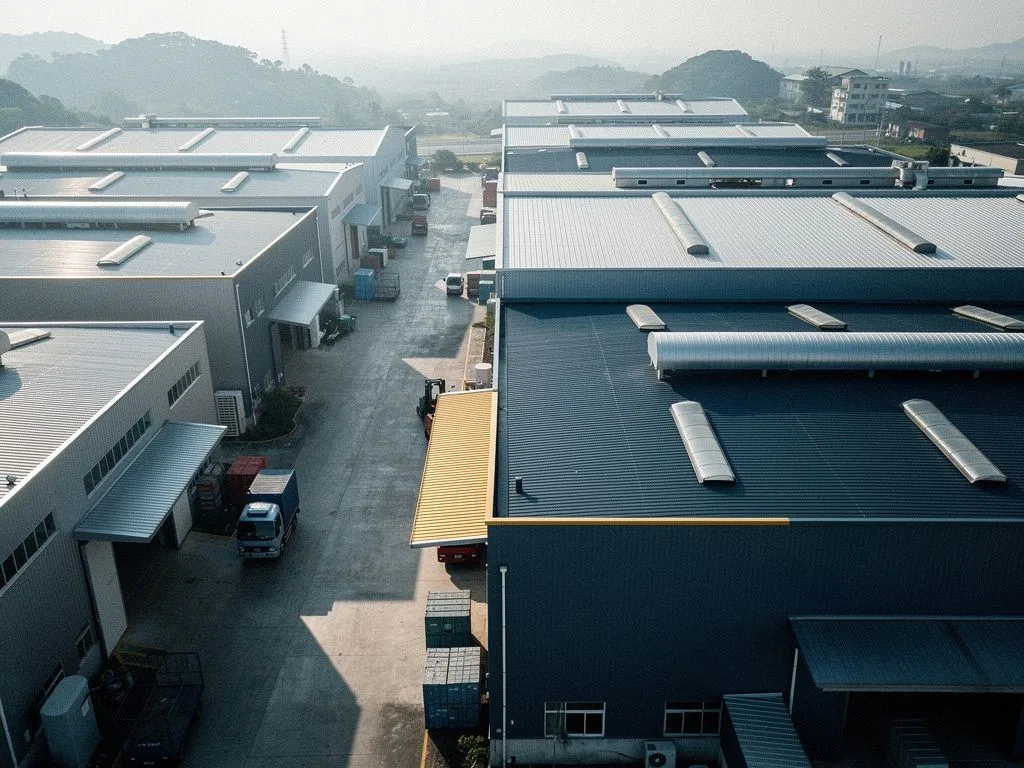
In the Asian supply chain, Taiwan CNC precision machining is typically positioned as a source for "medium-volume, precision parts," sitting between China's low-cost high-volume parts and Japan's high-end precision parts. Due to the Taichung cluster's proximity to precision machinery and science parks, machining shops commonly possess 3-axis to 5-axis milling, mill-turn, and Swiss-type lathe capabilities, enabling them to handle both prototyping and mass production. For OEM and Tier-1 buyers, Taiwan's value lies in delivery flexibility, specification communication efficiency, and mature processing experience with common metals such as aluminum alloy, stainless steel, carbon steel, and brass.
Key Takeaways

  • Positioned for Medium-Volume, Precision Parts

    In the Asian supply chain, Taiwanese CNC machining sits between low-cost, high-volume production in mainland China and high-end precision parts from Japan, serving as a source for medium-volume, precision components.

  • Mid-Range Pricing with Upper-Mid Precision

    Pricing is higher than standard parts from Southeast Asia and mainland China but lower than high-end parts from Japan and Germany, occupying a mid-price, upper-mid precision segment. The Taichung cluster consistently handles IT7–IT8 tolerance levels.

  • Three Practical Advantages

    Low specification communication costs, high delivery flexibility, and stable material sourcing are the main reasons OEM and Tier-1 buyers prioritize Taiwan.

  • Competitive Part Types

    Small-diameter long shafts, complex-geometry aluminum housings and flanges, stainless steel and carbon steel structural parts, and brass and copper conductive/heat-dissipating components are the most competitive.

Where do Taiwan CNC machining price and precision levels fall in the Asian supply chain?

Taiwan CNC machining prices are typically higher than standard parts from Southeast Asia and China, but lower than high-end parts from Japan and Germany, placing it in the "mid-price, mid-to-high precision" range. In terms of precision, machining shops in the Taichung cluster can consistently handle tolerances at IT7–IT8 levels. For complex geometries requiring 5-axis, mill-turn, or Swiss-type lathe capabilities, Taiwan is one of the few options in Asia that can balance both delivery and precision. When comparing quotes, buyers should factor in "unit price" alongside "defect rate, on-time delivery rate, and specification modification flexibility" to reflect the true total cost of ownership. For parts in the prototyping stage, Taiwan's responsiveness is often more decisive than lower-cost production bases.

Why do OEM and Tier-1 buyers prioritize Taiwan over other Asian production bases?

OEM and Tier-1 buyers prioritize Taiwan for three practical reasons: first, low specification communication costs—technical coordination in both Chinese and English is smooth, reducing drawing interpretation errors; second, high delivery flexibility—prototyping and mass production can be completed at the same supplier, avoiding quality drift from switching factories; third, stable material sourcing—common metals such as aluminum alloy, stainless steel, carbon steel, brass, and copper have a mature supply chain around the Taichung cluster, lowering the risk of material shortages. For buyers requiring ISO 9001:2015 quality systems and traceable inspection processes, Taiwanese machining shops generally already have these systems in place, which is a basic threshold for entering Tier-1 supply chains.

Specific advantages of Taiwan CNC machining relative to other Asian production bases

  • Delivery flexibility

    Prototyping to mass production can be completed at the same supplier, shortening development cycles and suiting OEM projects with high delivery pressure.

  • Swiss-type lathe small-diameter parts

    Swiss-type lathes such as Star are suitable for precision parts with high length-to-diameter ratios and small diameters, an area that is difficult for low-cost Southeast Asian production bases to replicate.

  • Mill-turn and 5-axis milling

    Complex geometries are completed in a single setup, reducing cumulative errors and suiting precision metal parts requiring multi-face machining.

  • Stable material sourcing

    Common metals such as aluminum, stainless steel, carbon steel, brass, and copper have a mature supply chain around Taichung, lowering the risk of material shortages.

  • ISO 9001:2015 quality system

    Most machining shops are certified and have three-stage inspection processes for incoming materials, in-process, and outgoing goods, meeting basic Tier-1 supply chain requirements.

  • Specification communication efficiency

    Technical coordination in both Chinese and English is smooth, with fewer drawing interpretation errors, reducing back-and-forth modification costs during the prototyping stage.

taichung cluster scene 1

For which part types is Taiwanese CNC machining most competitive?

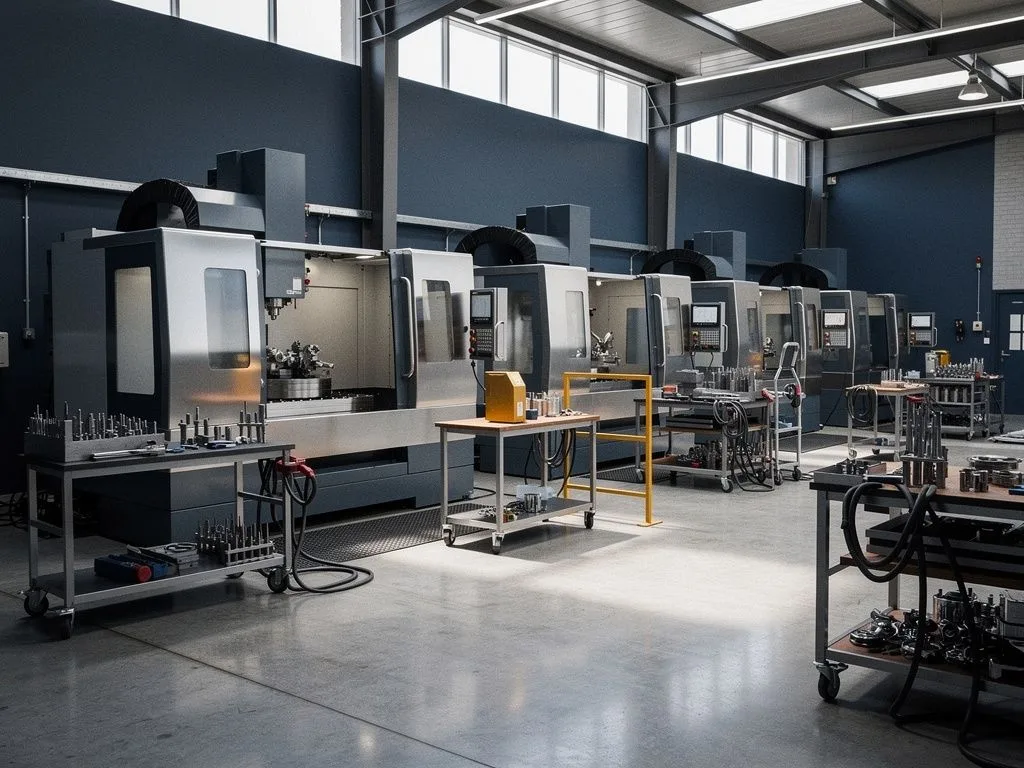
Taiwanese CNC machining is most competitive for the following part types: first, small-diameter long shaft parts, such as shafts and fittings for optical, medical, and pneumatic components, which are well suited to Swiss-type lathe machining; second, aluminum alloy housings and flanges with complex geometries, which suit 5-axis milling or mill-turn machining; third, structural parts in stainless steel and carbon steel that require tight tolerances and pre-finishing precision; fourth, conductive and heat-dissipating parts in brass and copper, where material characteristics require stable cutting parameter experience. The common feature of these part types is "high precision requirements, medium batch sizes, and frequent specification changes," which is exactly the main battlefield of the machining cluster in Taichung. When evaluating suppliers, buyers should confirm that they have the corresponding equipment and material experience, rather than looking only at unit price.
What information should buyers prepare when requesting a quote from a Taiwanese CNC shop?

When requesting a quote from a Taiwanese CNC machining shop, buyers are advised to prepare the following information: first, 2D and 3D drawings with clear callouts for tolerances, surface roughness, and critical dimensions; second, material specifications, including grade and source, to prevent the shop from using substitute materials; third, estimated order quantities, distinguishing prototype quantities from production quantities, because the basis for quoting differs; fourth, post-processing requirements, such as anodizing, plating, heat treatment, or grinding, which affect lead time and cost; fifth, inspection standards, such as whether a shipping inspection report, dimensional inspection sheet, or material certificate is required. With a complete RFQ, buyers can usually receive a specific quote within 3–5 working days, and the shop can also accurately assess capacity scheduling, avoiding later disputes over delivery.

taichung cluster scene 2

What are the common limitations and risks of Taiwanese CNC machining?

Taiwanese CNC machining is not a universal solution, and buyers should note several common limitations: first, it is not competitive for very low-cost, high-volume parts; if unit price is the only consideration, Southeast Asia or mainland China remains a more economical choice; second, experience with certain special materials, such as titanium alloys and nickel-based superalloys, is concentrated in a few shops and should be confirmed in advance; third, capacity flexibility is limited, and when multiple projects coincide during peak season, lead times may extend; fourth, labor costs are higher, which is reflected in unit price, but also in quality stability and communication efficiency. Buyers should judge whether Taiwan is the most suitable production source based on the part's precision requirements, batch size, and delivery pressure, rather than sending all projects to the same region.

How can you tell whether a Taiwanese CNC machining shop is suitable for long-term cooperation?

To judge whether a Taiwanese CNC machining shop is suitable for long-term cooperation, evaluate it from four aspects: first, whether the equipment list covers the project's needs—for example, if a Swiss-type lathe is required, whether the shop actually has brand equipment such as Star; second, whether the quality system is traceable—ISO 9001:2015 is the basic requirement, and whether the three-stage inspection process of incoming, in-process, and outgoing inspection is actually implemented; third, whether material experience covers common metals—whether the shop is familiar with cutting parameters for aluminum, stainless steel, carbon steel, brass, and copper; fourth, communication and response speed—the pace of replies from RFQ to quote and from prototype to mass production reflects how smoothly future cooperation will go. It is recommended that buyers test with a prototype order before formally placing a production order, observing actual delivery, quality, and problem-handling attitude, and then decide whether to enter mass production cooperation.

FAQ

What is Taiwan's position in the Asian CNC machining supply chain?

Taiwanese CNC precision machining is typically positioned as a source for 'medium-volume, precision parts' in the Asian supply chain, sitting between low-cost, high-volume production in mainland China and high-end precision parts from Japan. Machining shops in the Taichung cluster commonly offer 3-axis to 5-axis milling, mill-turn, and Swiss-type sliding headstock capabilities, handling both prototyping and mass production.

Where do Taiwanese CNC machining prices and precision levels fall?

Taiwanese CNC machining prices are generally higher than standard parts from Southeast Asia and mainland China but lower than high-end parts from Japan and Germany, placing them in the 'mid-price, upper-mid precision' range. In terms of precision, machining shops in the Taichung cluster consistently handle IT7–IT8 tolerance levels.

Why do OEM and Tier-1 buyers prioritize Taiwan?

OEM and Tier-1 buyers prioritize Taiwan mainly due to three practical factors: low specification communication costs, high delivery flexibility, and stable material sourcing. For buyers requiring ISO 9001:2015 quality systems and traceable inspection processes, Taiwanese machining shops generally already have these systems in place.

What information should be prepared when requesting quotes from Taiwanese CNC shops?

It is recommended to prepare 2D and 3D drawings, material specifications, estimated order quantities, post-processing requirements, and inspection standards. With a complete RFQ, you can typically receive a specific quote within 3–5 business days, and it also allows the machining shop to accurately assess production scheduling, avoiding later delivery disputes.

How can you determine if a Taiwanese CNC machining shop is suitable for long-term cooperation?

Evaluate from four aspects: whether the equipment list covers the project requirements, whether the quality system is traceable, whether material experience covers common metals, and communication and response speed. It is recommended to test with a trial project before placing formal orders, observing actual delivery, quality, and problem-handling attitude.

Need to evaluate the feasibility of working with a Taiwanese CNC machining supplier?

Please prepare 2D/3D drawings, material specifications, and estimated order quantities, and submit them via the inquiry form. A specialist will assess lead time and process feasibility and get back to you.