Why Do Quotes for the Same Drawing Vary So Much Between Manufacturers?
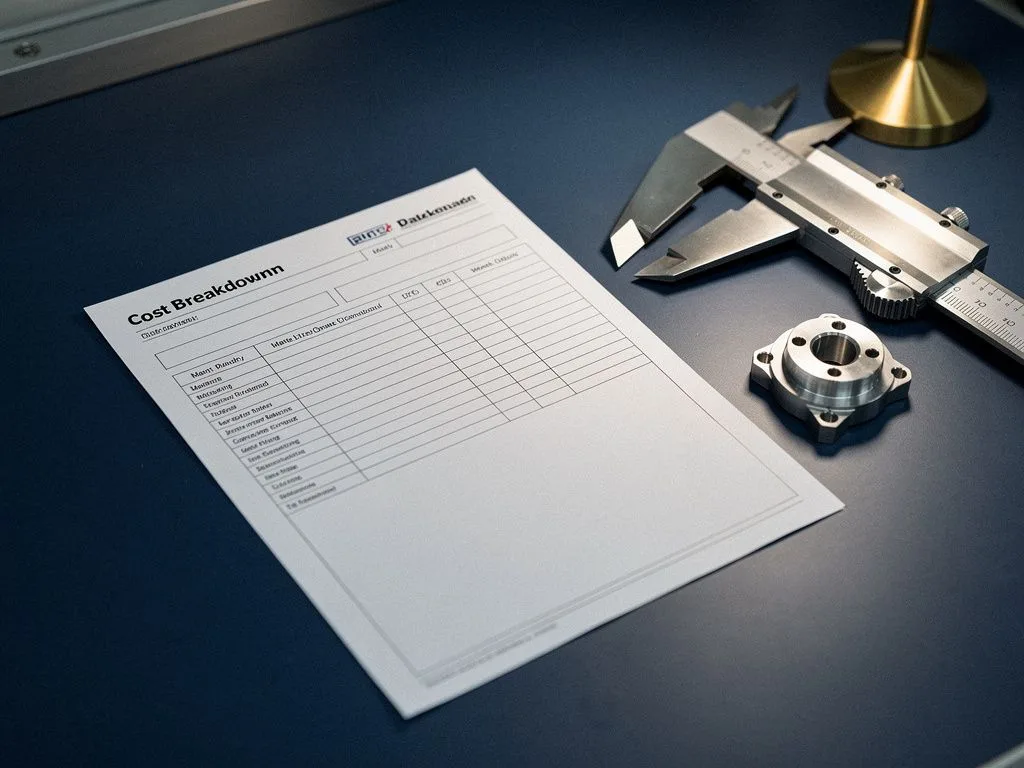
When the same part drawing is sent to different CNC manufacturers, quoted prices can vary by several times. This difference does not come from profit margins, but from how the process is broken down, equipment utilization costs, the depth of quality inspection, and batch conditions. If buyers only compare unit prices, they can never determine which quote is reasonable. The correct approach is to break the quote into five cost blocks—materials, machining, setup, quality control, and risk—and require each supplier to disclose them item by item. Only then can you obtain predictable total per-piece costs during both the prototyping and mass-production stages.
Key Takeaways
Quotation Differences Stem from Process Breakdown
For the same drawing, different manufacturers break down process steps differently. The more tool changes and fixture changes, the higher the per-piece cost. Buyers should require suppliers to disclose process steps and man-hours.
Equipment Utilization Affects Per-Piece Cost
High-precision Japanese and Swiss machines have higher hourly costs, but they offer stable tolerances and low scrap rates. Compare total per-piece cost, not just unit price.
Inspection Depth Determines Risk Cost
The cost difference between full inspection and sampling inspection is significant. Buyers should define inspection requirements and ask suppliers to explain their inspection methods. The lowest quote without a quality control process carries the highest risk.
Batch Conditions Change the Quotation Basis
Setup costs are amortized differently between prototype and production orders, and unit prices can differ by several times. Require suppliers to separate setup costs from per-piece machining costs.
First Source of Price Differences: Different Process Breakdowns
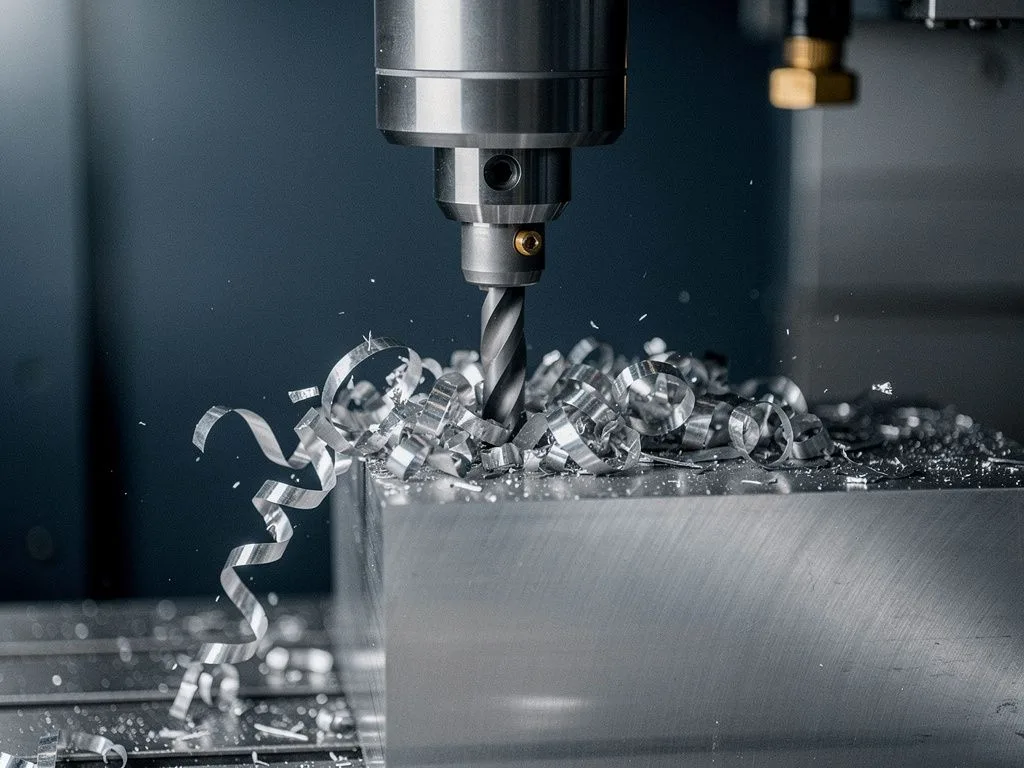
For the same drawing, Factory A might only need three turning operations plus one milling operation, while Factory B breaks it down into five turning operations, two milling operations, and one EDM operation. This happens because the two suppliers have different judgments about the most reasonable process. The more process steps there are, the more tool changes, fixture changes, and re-alignment operations are required—and each additional step consumes machine time. Buyers should ask suppliers to list the main process steps and the estimated time for each step on the quote, rather than just providing a total price. If a supplier cannot explain its process breakdown logic, the quote itself lacks a basis for review. Evaluation principle: the fewer the process steps and the shorter the time per step, the lower the theoretical per-piece machining cost—provided the supplier has the corresponding multi-function machining equipment and a mature CAM program library.
Equipment and Utilization Costs: Why Japanese and Swiss Machine Quotes Are Higher
Suppliers using high-precision imported Japanese or Swiss CNC equipment have higher per-hour machine costs than those using general-purpose machines. This is reflected in their machining rates, but in return they offer more stable tolerance achievement rates and lower scrap risk. The question buyers should ask is not "how much per hour," but "what is the actual utilization rate of this machine for this workpiece, and how much time is spent on daily mold changes and cleaning?" The higher the utilization rate and the shorter the changeover time, the lower the fixed cost allocated per piece. Conversely, if a supplier mixes different workpieces in the same schedule to rush orders, the number of changeovers increases sharply, and those costs are passed on to the quote. Evaluation principle: ask the supplier to explain the machine type and utilization conditions, and compare based on total per-piece cost rather than unit price—only then can you see whether the equipment investment truly reflects quality.

Material and Material Sourcing Costs: Tax-Inclusive with Freight, or Bare Material?
Differences in the "material cost" line on quotes usually come from three sources: material grade (304 vs. 304L, 6061 vs. 6063), purchase quantity (single bar vs. full batch), and whether freight and tax are included. For the same drawing specifying "stainless steel," Factory A might quote with 304 while Factory B quotes with 316, widening the unit price gap. Buyers should clearly specify the material grade and specification when requesting a quote (e.g., SUS304, S50C, A6061-T6) and require suppliers to state the material source and unit price on the quote. If a supplier only writes "stainless steel" without specifying the grade, that quote cannot be compared with others. Evaluation principle: the higher the proportion of material cost in the total quote, the more important it is to verify the grade, specification, and billing weight item by item.
Depth of Quality Inspection: Sampling or 100% Inspection
Quality inspection cost is the most easily overlooked part of price differences. If the same drawing requires 100% inspection, the supplier must measure and record every workpiece, and the labor and manpower costs will be directly reflected in the quote. If only sampling inspection is required, the cost will be much lower, but the buyer's risk increases accordingly. Buyers should first define their own quality requirements: 100% inspection for critical dimensions, sampling for non-critical dimensions, and the sampling ratio for final pre-shipment inspection. They should also ask the supplier to explain the inspection methods (caliper gauges, CMM, projector) and whether measurement reports will be provided. Judgment principle: quality inspection cost is not about being as low as possible, but about aligning with the buyer's quality risk tolerance. The lowest-priced supplier without measuring equipment and quality processes is often the highest-risk choice.

Batch Size and Scheduling Conditions: Prototype Unit Price and Mass Production Unit Price Are Two Different Things
For the same drawing, the unit price difference between the prototype stage (fewer than ten pieces) and the mass production stage (more than a thousand pieces) is often greater than the difference between different suppliers. This is because setup costs at the prototype stage (CAM programming, fixture making, first-piece machine setup) are spread over very few pieces. Buyers should clearly tell the supplier whether this is a prototype order or a mass production order, and ask the supplier to separate 'setup costs' and 'per-piece machining costs' in the quote. If the supplier quotes a prototype order as a mass production order, setup costs will be underestimated; if a mass production order is quoted as a prototype order, the unit price will be overestimated. Judgment principle: the larger the batch and the more stable the order, the greater the room for per-piece cost reduction. If the buyer has mass production plans, they should inform the supplier in advance to secure more reasonable tiered pricing.
Risk and After-Sales: The Costs Not Written in the Quote
The after-sales costs not visible on the quote are often where the biggest difference in total cost lies. These include: return and replacement responsibility for defective parts, how measurement reports are provided, flexibility for re-quoting after design changes, and penalty clauses for delivery delays. Buyers should include these conditions in the RFQ at the inquiry stage and ask the supplier to respond to each item. Judgment principle: suppliers willing to put after-sales conditions in writing usually have confidence in their own quality; suppliers who only give a unit price without discussing terms often have the highest additional costs later.
Six Questions Buyers Must Ask Suppliers When Comparing Prices
What are the process steps for this workpiece?
Ask the supplier to explain the sequence of turning, milling, and combined machining, along with the estimated time for each step. The more process steps, the higher the per-piece cost.
Which type of CNC equipment is used?
Japanese and Swiss imported machines have higher hourly costs, but offer better tolerance stability and lower scrap rates. Comparison should be based on total per-piece cost.
Material grade and purchasing method
Ask for specific grades such as SUS304, S50C, A6061, and clarify whether materials are purchased in bulk or as individual bars, to avoid distorted comparisons due to vague grades.
Quality inspection method and sampling ratio
The scope and execution of 100% inspection, sampling inspection, and final pre-shipment inspection, and whether CMM measurement reports are provided, directly affect quality inspection costs.
Is this a prototype order or a mass production order?
Setup costs and per-piece machining costs should be quoted separately. Unit prices can differ several times depending on batch conditions.
After-sales and defective parts handling terms
Return and replacement responsibility, measurement report delivery, and delivery delay compensation—these hidden costs often determine the total cost of ownership.
How to Use This Checklist to Judge Whether a Quote Is Reasonable
Lay out the answers to the six questions side by side, and it becomes immediately clear whether a quote is reasonable. If Supplier A offers the lowest price but cannot answer questions about process nodes, material grades, or quality control methods, that quote carries the highest risk cost. If Supplier B quotes a mid-range price but can explain item by item its machine types, utilization conditions, and inspection procedures, that quote actually has the lowest total cost per part. The correct order for buyers comparing quotes is: first compare the completeness of information disclosure, then compare total cost per part, and only last compare unit price. This logic applies to both the prototyping stage and the mass production stage; the only difference is that in mass production, two additional evaluation items must be added: volume-based tiered pricing and delivery reliability.
FAQ
Why do different suppliers quote so differently for the same drawing?
Quotation differences mainly come from process breakdown methods, equipment utilization costs, inspection depth, and batch conditions—not simply profit margins. Buyers should break down quotes into five cost blocks: material, machining, setup, inspection, and risk, and require suppliers to disclose each item to judge whether the quote is reasonable.
How can I tell if a supplier's quote is reasonable?
First compare the completeness of information disclosure, then compare total per-piece cost, and only finally compare unit price. If a supplier offers the lowest quote but cannot answer process steps, material grades, and inspection methods, the risk cost is highest. If a quote is mid-range but can explain machine types, utilization conditions, and inspection procedures item by item, the total per-piece cost is actually the lowest.
What questions should I ask suppliers when requesting a quote?
Ask six questions: What are the process steps? What type of CNC equipment is used? What are the material grades and procurement methods? What are the inspection methods and sampling ratios? Is this a prototype or production order? What are the after-sales and non-conforming product handling terms? Once these answers are laid out, the reasonableness of the quote becomes clear.
Where do material cost differences mainly come from?
Material cost differences come from material grades (e.g., 304 vs. 316), procurement batch size (single bar vs. full batch), and whether shipping and tax are included. Buyers should specify material grades and specifications when requesting quotes, and require suppliers to note material sources and unit prices on the quotation for comparison.
Why do prototype and production quotes differ so much?
In the prototype stage, setup costs (CAM programming, fixture making, first-piece setup) are amortized over very few pieces, so unit prices are naturally higher. In the production stage, larger batch sizes and stable orders allow greater per-piece cost reduction. Buyers should clearly state whether the order is prototype or production, and require separation of setup costs from per-piece machining costs.
Send Us Your Part Drawings and Requirements for an Itemized Quote
If you have part drawings and requirements for materials, machining, batch size, and quality control, feel free to send them directly to [email protected]. We will reply with an itemized quote covering three dimensions—process nodes, equipment utilization, and quality inspection—so you can clearly see where every dollar goes.