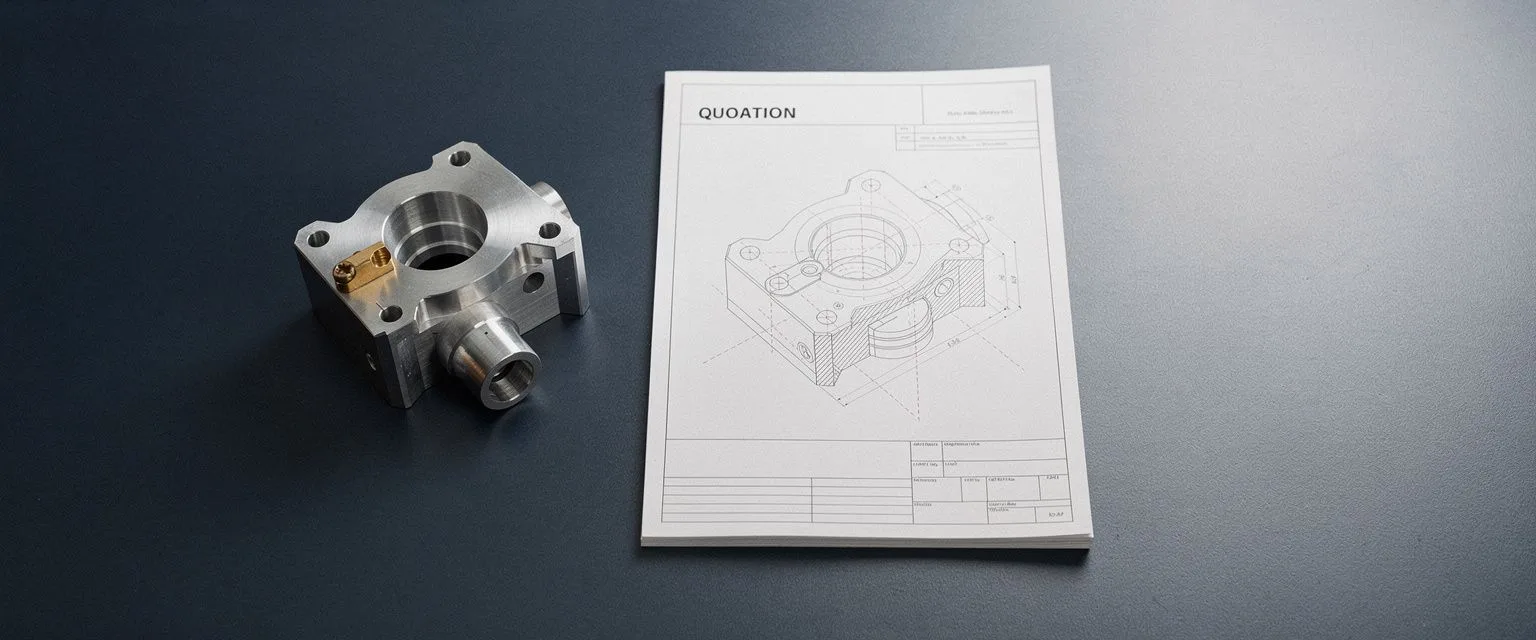
What costs make up a CNC machining quote?
A CNC machining quote is made up of six cost components: material cost, programming cost, machine hourly cost, fixture and workholding cost, quality inspection cost, and surface treatment cost. The sum of these six items, plus the supplier's overhead and profit, is the quotation the buyer receives. Understanding how these six costs are calculated is the first step in judging whether quotes from different suppliers are reasonable.
Key Takeaways
Quotes consist of six cost components
CNC machining quotes are the sum of material costs, programming fees, machine hour costs, fixture and jig costs, quality inspection fees, and surface treatment costs, plus overhead and profit.
Quote differences come from three variables
Price differences for the same drawing across different suppliers mainly come from machine grade, machining strategy, and quality standards. Before comparing prices, these three differences should be compared first.
Batch size amortization affects unit price
Batch size is the most sensitive factor affecting unit price. Fixed costs such as programming, fixtures, and setup are amortized, but machine hours are a bottleneck. Exceeding capacity requires overtime, which increases costs.
Tolerances and materials drive costs
Tightening tolerance by one grade can increase costs by 20-40%. Materials affect tool life and machining time. Aluminum alloys are the most friendly, while stainless steel and high-hardness alloy steels are more costly.
Why do quotes for the same drawing vary so much between different CNC shops?
The same drawing can produce significantly different quotes from different CNC machining shops, mainly due to three variables: machine grade, machining strategy, and quality control standards. Machine grade directly affects machining accuracy and cycle time. For example, suppliers using high-precision CNC equipment imported from Japan or Switzerland may have higher unit prices, but they can maintain stable yields under tighter tolerances. Machining strategy depends on how the CAM engineer writes the program. For the same part, different tool paths, cutting parameters, or five-axis composite machining strategies can result in up to a 30% difference in machining time. Quality control standards determine the inspection cost before shipment—whether a CMM is available, whether SPC statistical process control is implemented, and whether MSA measurement system analysis and GR&R Gauge Repeatability & Reproducibility studies are required—all of which are reflected in the quote. When buyers receive three quotes, rather than comparing prices directly, they should first compare these three differences to understand why the cheaper quote may have omitted certain invisible costs.
How does order quantity change the unit price of CNC machining?
Order quantity is the most sensitive factor affecting CNC machining unit price because fixed costs are amortized. When an order is only 5 prototype pieces, the programming cost, fixture cost, and first-piece setup cost are all concentrated on those 5 pieces, so the unit price is naturally higher. When the quantity increases to 500 or even 5,000 pieces, these one-time costs are diluted and the unit price drops noticeably. However, amortization is not unlimited—machine time is the real bottleneck. How many workpieces a CNC milling machine can run per day sets the cycle time ceiling. When the order quantity exceeds machine capacity, the supplier must work overtime or add a second shift, which raises labor and electricity costs. When preparing an RFQ, buyers should clearly state the estimated annual usage and batch size per order so the supplier can plan production scheduling accordingly, rather than just sending a drawing and asking for a quote. Only then will the unit price reflect the actual numbers for a real cooperation.
The six cost components of a CNC machining quote
Material cost
Calculated based on the material grade and weight specified on the drawing, including material waste and procurement overhead. Aluminum, copper, stainless steel, and alloy steel have very different unit prices, which affects the overall quote.
Programming cost
The cost for CAM engineers to convert 2D or 3D drawings into tool paths. Five-axis and composite machining programs are more complex, take longer to program, and cost more.
Machine hourly cost
Calculated based on machine grade and actual cutting time, including equipment depreciation, tool wear, and electricity. Machines with higher precision and more stable cycle times generally have higher hourly rates.
Fixture and workholding cost
The cost of fixtures and workholding designed to stabilize workpiece positioning. This can be amortized in mass production but is a one-time burden for prototypes. The more irregular the part shape, the more complex the fixture design.
Quality inspection cost
The labor and instrument cost for incoming inspection, in-process checks, and final inspection before shipment. Whether CMM measurement is used and whether SPC and GR&R are implemented directly affect this cost.
Surface treatment cost
The cost of outsourced or in-house post-processing such as anodizing, electroplating, sandblasting, and polishing, depending on the required surface roughness Ra value and the treatment method.

How much does tightening tolerances by one grade increase CNC machining costs?
Tolerance is the most underestimated cost variable in CNC machining quotations. For general production parts, tolerances of ±0.05 mm are typical. If tightened to ±0.02 mm, the machine must cut at reduced speeds, tool wear accelerates, and yield rates drop, potentially increasing costs by 20% to 40%. If further tightened to ±0.01 mm or even stricter precision tolerances of 0.007 mm, higher-precision CNC lathes or milling machines are required, along with CMM inspection on a per-part or sampling basis, significantly raising both machining and quality control costs. Surface roughness follows the same logic: tightening from Ra 1.6 µm to Ra 0.8 µm requires finer cutting parameters; when Ra 0.3 µm is required, special tooling or additional grinding processes are often necessary. When drawing up specifications, buyers should only apply strict tolerances to critical dimensions and mating surfaces, leaving other dimensions at general tolerances. This controls costs while allowing suppliers to quote within a reasonable precision range.
What practical impact does material selection have on CNC machining costs?
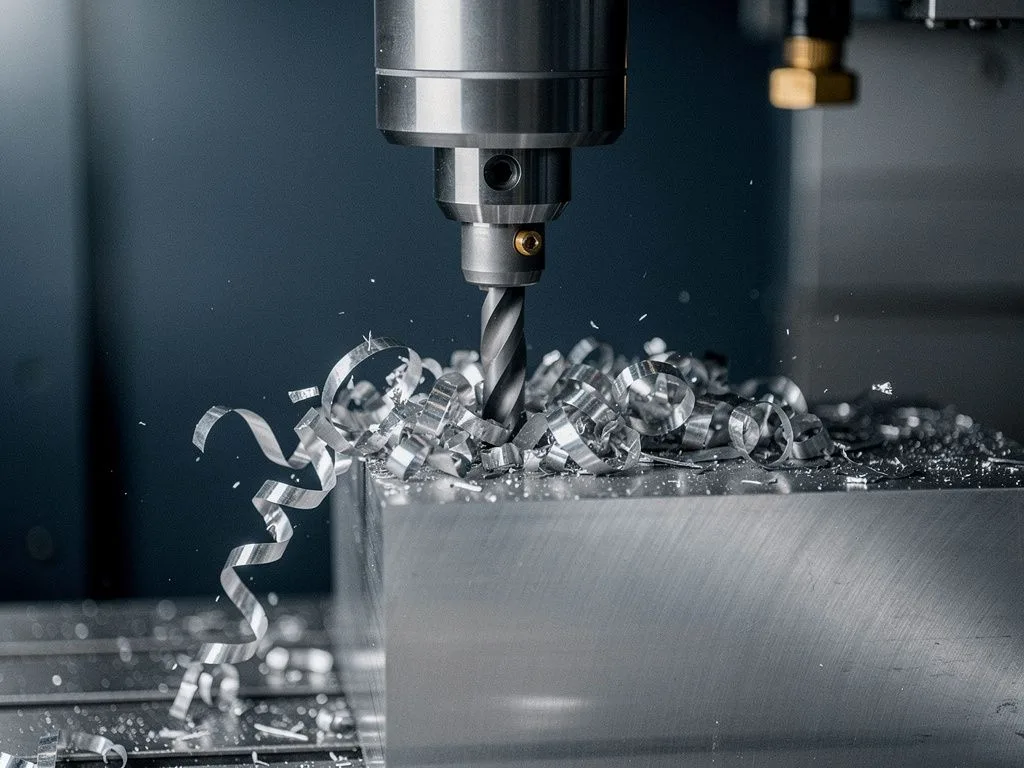
Material directly affects tool life, cutting speed, and machining difficulty, which in turn determines labor costs. Aluminum alloy is the most CNC-machining-friendly material, offering fast cutting speeds and low tool wear, resulting in relatively lower labor costs. Copper alloys conduct heat well but tend to stick to tools, requiring slower cutting parameters. Stainless steel and high-hardness alloy steels significantly accelerate tool wear, requiring reduced speeds and frequent tool changes, which noticeably raises labor costs. FRP fiber composites, due to their high hardness and strong directional properties, have limited tooling options, and machining costs are typically higher than for metal parts. Material costs themselves also account for a significant portion of the quotation. Specialty grades such as titanium alloys, Invar, or aerospace-grade aluminum can cost several times more per unit than standard S45C carbon steel. When specifying materials, buyers should confirm that there is a functional requirement supporting the choice. If the selection is only for appearance or corrosion resistance, switching to a more machinable material combined with subsequent surface treatment may result in lower overall costs.

How should fixture and programming costs be viewed?
Fixture and programming costs are one-time expenses that are amortized during mass production, but they are directly reflected in quotations during the prototyping stage. The complexity of fixture design depends on the part geometry: cylindrical symmetrical parts can use a three-jaw chuck, flat parts may require vacuum suction or dedicated clamping plates, and irregular parts require custom fixtures, with costs ranging from a few hundred to tens of thousands of dollars. Programming costs relate to the machining strategy: simple 2D turning or milling programs are completed quickly, while complex programs for five-axis machining or Swiss-type automatic lathes require longer programming and simulation time. When requesting quotes, buyers should proactively ask how these two costs are calculated: whether they are charged once and then amortized, or directly included in the unit price. If there is potential for ongoing orders, buyers can agree with the supplier on the ownership of fixtures and programs to avoid duplicate charges. For prototyping development teams, understanding the structure of these two costs helps in negotiating with OEM parts suppliers or Tier-1 partners, providing room for price discussions.
Which design adjustments can reduce CNC machining costs without sacrificing functionality?
DFM (Design for Manufacturing) is the most direct way to reduce CNC machining costs. Common adjustments include: avoiding strict tolerances on curved or angled surfaces, as these areas are more difficult to machine and measure; changing internal sharp corners to R-corners so standard tools can access them, reducing the need for EDM or special tooling; reducing the number of deep grooves and narrow slots, as these features significantly extend machining time; standardizing hole sizes so one tool can machine multiple holes, reducing tool change frequency; and converting blind holes to through holes, which are easier and cheaper to machine. These adjustments do not compromise part functionality but allow CAM engineers to use more efficient tool paths, reducing labor, tooling, and fixture costs simultaneously. Before sending drawings for quotation, buyers should discuss DFM recommendations with the CNC machining supplier's engineering team, which often yields more substantial cost optimization than simply comparing prices.
FAQ
Why do different CNC suppliers quote so differently for the same drawing?
Quote differences mainly come from three variables: machine grade, machining strategy, and quality standards. Machine grade affects precision and cycle time, machining strategy affects machining time, and quality standards determine inspection costs. A cheap quote may omit invisible costs.
How does batch size change the unit price of CNC machining?
Batch size is the most sensitive factor affecting unit price, as fixed costs are amortized. A 5-piece prototype has a higher unit price, while at 500 or 5,000 pieces, one-time costs are diluted and unit price drops. However, machine hours are a bottleneck; exceeding capacity requires overtime, which increases costs.
How much does tightening tolerance by one grade increase CNC machining costs?
Tightening from general production tolerance ±0.05 mm to ±0.02 mm can increase costs by 20-40%. If ±0.01 mm or stricter is required, higher-precision machines and CMM measurement are needed, significantly raising machining and quality control costs.
What is the actual impact of material selection on CNC machining costs?
Materials affect tool life, cutting speed, and machining difficulty. Aluminum alloys are the most friendly with low machining time costs, copper alloys tend to stick to tools, stainless steel and high-hardness alloy steels accelerate tool wear, FRP has high costs, and special-grade materials can be several times the price of ordinary carbon steel.
Which design adjustments can reduce CNC machining costs without sacrificing function?
DFM (Design for Manufacturing) is the most direct way to reduce costs, including avoiding strict tolerances on curved surfaces, changing internal sharp corners to R corners, reducing deep slots and narrow gaps, standardizing hole sizes, and changing blind holes to through holes. These adjustments do not sacrifice function but make tool paths more efficient.
Ready to Get an Accurate CNC Machining Quote?
Provide 2D or 3D drawings, estimated batch size, key tolerances, and material grades, and let the engineering team break down each cost component for you, avoiding unexpected additional charges later.
延伸主題
- Why Quotes for the Same Drawing Vary So Much Between Suppliers
- How Batch Size Affects Unit Price: The Relationship Between Amortization and Cycle Time
- How Much Does Tighter Tolerance Increase Cost?
- How Material Selection Actually Affects CNC Machining Costs
- How to Evaluate CNC Fixture and Programming Costs
- Which Design Adjustments Can Reduce Costs Without Sacrificing Function