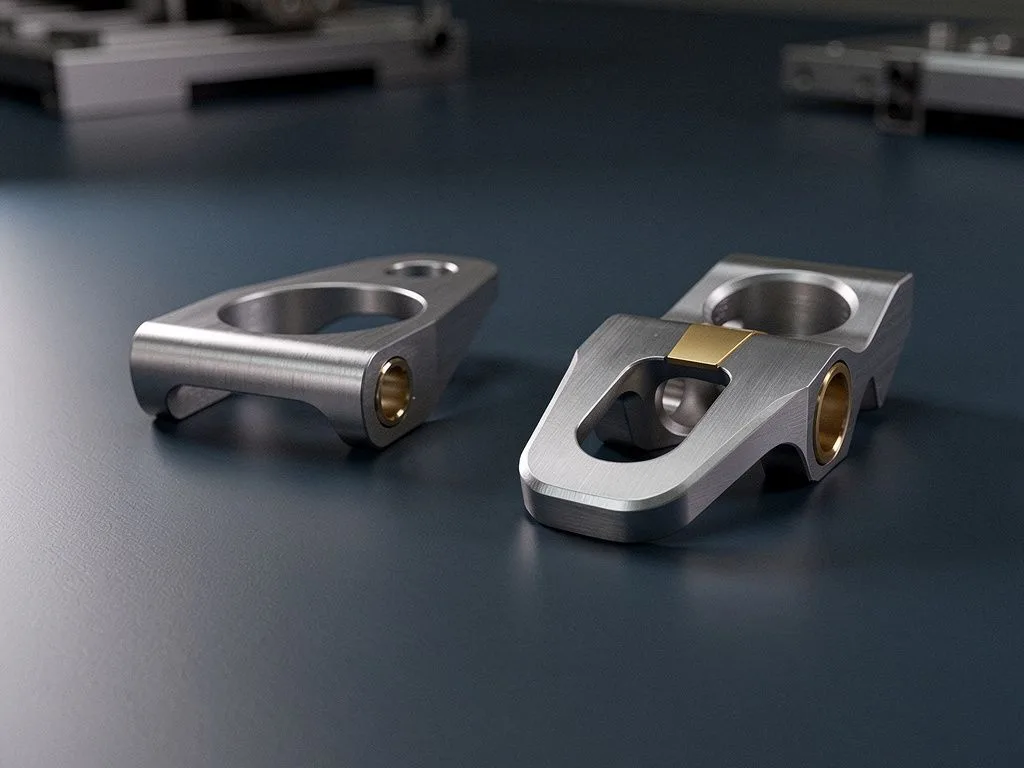
Design Adjustments That Reduce Costs Without Sacrificing Function
To reduce CNC machining costs without sacrificing function, the core approach is design-for-manufacturability (DFM) adjustments: simplifying geometry, consolidating processes, relaxing non-critical tolerances, selecting easily machinable materials, optimizing fixturing, and reducing secondary operations. These five adjustments can shorten machining time, reduce tool wear, and lower scrap risk while maintaining part function and quality. Before tooling or ordering, buyers can discuss each item with the CNC machining supplier and evaluate savings based on actual part geometry and batch size.
Key Takeaways
Design Adjustments Can Reduce Costs
Simplifying geometry, consolidating processes, relaxing non-critical tolerances, selecting easily machinable materials, optimizing workholding, and reducing secondary operations can shorten machining time, lower tool wear, and reduce scrap risk while maintaining function and quality.
Discuss Manufacturability Instead of Just Comparing Prices
CNC costs mainly come from machining time, tool consumption, fixtures, and defect rates. Discussing manufacturability at the drawing stage is more effective than demanding price reductions later. It is recommended to provide 3D files during RFQ and ask for DFM suggestions.
Relaxing Tolerances Requires Distinguishing Functions
Functional dimensions such as mating surfaces, sealing surfaces, and bearing seats must maintain original specifications. Non-functional dimensions such as appearance surfaces and installation allowances can be relaxed. The same applies to surface roughness; excessive precision directly reflects in costs.
Material Selection Affects Machining Time
Aluminum alloys have the shortest machining time, followed by carbon steel. Stainless steel and titanium alloys significantly extend cutting time due to work hardening. Material selection should consider both functional requirements and machining costs; factories can be asked for alternative suggestions.
Why Are Design-Side Adjustments More Effective Than Price Comparison in Lowering Total CNC Machining Costs?
Because in the cost structure of CNC machining, material costs typically account for only a portion; the real variable costs come from machining time, tool consumption, fixture design, inspection time, and defect rate. When the design itself requires five-axis machining, deep-cavity milling, extremely tight tolerances, or multiple re-fixturing, even if the unit price is lowered, total hours and scrap risk still drive up overall expenses. If buyers discuss manufacturability with the factory at the drawing stage, it is often more effective than requesting price reductions later. It is recommended to provide 3D files at the RFQ stage and ask for the factory's DFM feedback, which is also one way to assess whether a CNC machining supplier has engineering support capabilities. Yuan Shun Li is equipped with CAD/CAM software such as UG and ESPRIT, and can provide process feedback during the trial production stage.
Which Geometric Features Can Be Simplified Through Design to Reduce Machining Difficulty?
Common adjustable items include: avoiding internal concave R corners smaller than the tool diameter, reducing cavities with excessive depth-to-width ratios, merging multiple independent features into a single milling path, and avoiding multiple different machining directions on the same face. Each simplification directly shortens cutting time and reduces tool change count. For example, converting a deep cavity into a stepped structure, or merging multiple hole positions into the same milling direction, can make the tool path smoother. Before sending drawings, buyers can ask themselves: is this feature functionally necessary? If it is only for appearance or assembly clearance, alternative solutions can often be discussed with the factory. Note that geometric simplification must be based on not affecting assembly and function; it is recommended to confirm with the design side before making changes.
Five Design Adjustment Directions to Discuss with the CNC Machining Supplier at the RFQ Stage
Relax Non-Critical Tolerances
Relaxing tolerances on non-mating surfaces from ±0.01 mm to ±0.05 mm can significantly reduce the time to meet specifications and the number of measurements, while retaining precision on critical mating dimensions.
Select Easily Machinable Materials
Where function allows, replacing stainless steel with 6061 aluminum or 12L14 free-cutting steel can reduce tool wear and cutting time, but strength and corrosion resistance requirements must be evaluated.
Consolidate Processes to Reduce Re-Fixturing
Reconfigure features that require front and back machining so that a five-axis or Swiss-type lathe can complete them in one setup, reducing secondary clamping and cumulative error.
Optimize Fixturing and Datum Surfaces
Reserving process datum surfaces or keeping clamping areas away from machining zones can shorten fixture design time and reduce deformation risk, improving first-pass yield.
Reduce Secondary Operation Requirements
By reviewing surface roughness specifications and avoiding complex internal holes that require hand polishing or deburring, additional labor and downstream processing costs can be saved.

How Can Tolerance and Surface Roughness Be Relaxed Without Sacrificing Function?
How can tolerance and surface roughness be relaxed without sacrificing function? The key is to distinguish between "functional dimensions" and "non-functional dimensions." Functional dimensions include mating surfaces, sealing surfaces, bearing seats, and dowel pin holes—these directly affect assembly and operation and must maintain their original specifications. Non-functional dimensions include cosmetic surfaces, assembly clearance, and residual machining holes, which can be discussed with the factory for relaxation. The same logic applies to surface roughness: sealing and mating surfaces need to maintain low roughness, but cosmetic or non-contact surfaces can be relaxed to standard machined finishes. When preparing drawings, buyers can proactively mark which dimensions are "critical tolerances" and which are "general tolerances," allowing the factory to differentiate machining strategies at the quoting stage. Yuan Shun Li can achieve precision tolerances of 0.007 mm and surface roughness of Ra 0.3 µm, but this does not mean every dimension needs this level—over-specifying precision will be directly reflected in cost.
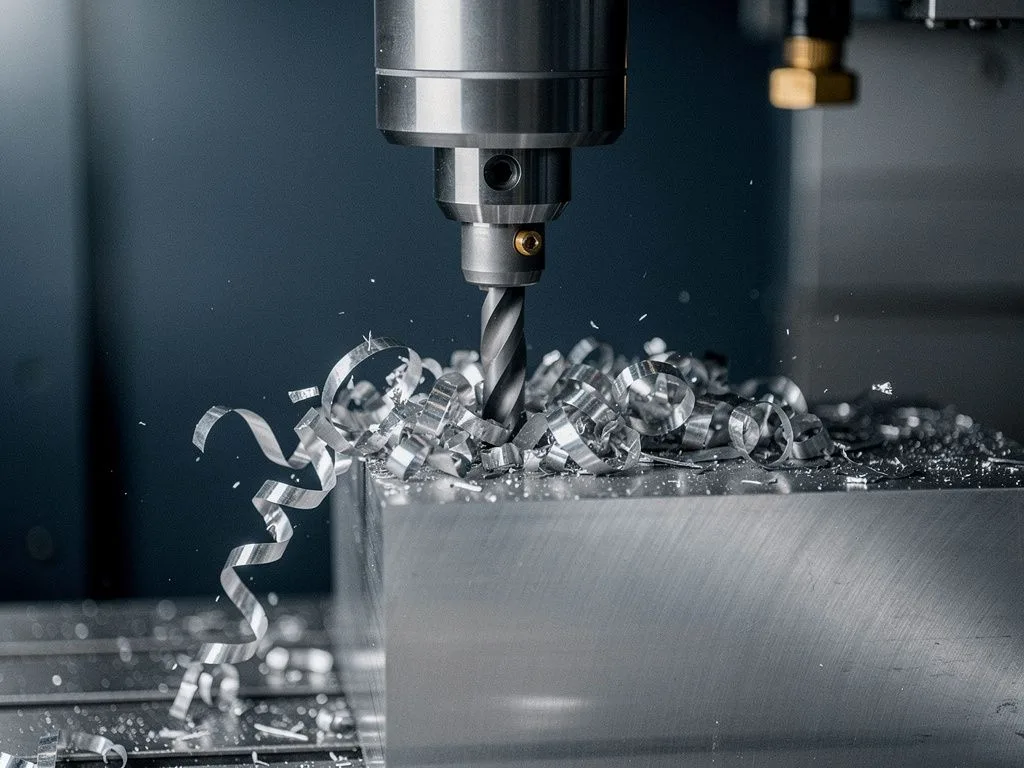
How Does Material Selection Affect CNC Machining Cost and Subsequent Functionality?
How does material selection affect CNC machining cost and subsequent functionality? Different materials vary greatly in cutting resistance, tool wear, and thermal conductivity, which directly impacts machining time and tool life. Comparing common materials, aluminum alloy is soft and easy to cut, resulting in the shortest machining time; carbon steel takes longer; stainless steel and titanium alloys exhibit significant work hardening, substantially extending cutting time. When selecting materials, buyers should consider both functional requirements (strength, corrosion resistance, conductivity, weight) and machining cost. For example, for the same shaft component, if the application allows replacing 304 stainless steel with 6061 aluminum, machining time can be greatly reduced; however, if used in food machinery or medical devices, corrosion resistance may be non-negotiable. Yuan Shun Li can machine iron/carbon steel, aluminum, copper, FRP, and various alloys. Buyers can provide the application context so the factory can recommend alternative materials that balance function and cost.
DFM Discussion Process
- 1
Provide Complete Drawings
Provide 3D files (STEP or IGES) and 2D engineering drawings during the RFQ stage, marking critical tolerances, surface roughness, and usage scenarios.
- 2
Factory Provides DFM Suggestions
Factories with CAD/CAM capabilities propose simplification suggestions for the drawings, such as merging features, relaxing tolerances, adjusting corner radii, or changing materials.
- 3
Evaluate Functional Impact
Buyers and the design team confirm whether DFM suggestions affect function and assembly before deciding whether to adopt them.
- 4
Provide Batch Information
Provide annual usage, estimated batch size, and delivery requirements, which influence whether the factory recommends more efficient machining strategies.

How Can Process Consolidation and Fixture Optimization Reduce Cumulative CNC Machining Costs?
How can process consolidation and fixture optimization reduce cumulative CNC machining costs? When a part requires multi-side machining, each re-fixturing introduces new positioning errors, fixture costs, and time costs. By adjusting the design to concentrate features on the same machining direction, or by using Swiss-type lathes or five-axis machines to complete the part in a single setup, these hidden costs can be significantly reduced. Specific approaches include: placing holes and grooves in the same quadrant, reserving process datum surfaces, and avoiding deep cavities that require excessive tool overhang. When submitting drawings, buyers can proactively ask the factory: "Can this part be completed in a single setup?" If the factory has five-axis or Swiss-type multi-tasking capabilities, they can often provide specific feedback. Yuan Shun Li is equipped with 48 machines, including Swiss Star automatic lathes and Japanese BROTHER machining centers, supporting various fixturing strategies from prototyping to mass production. However, the actual scope of single-setup machining must be confirmed based on part geometry and material.
How Should Buyers Conduct Design for Manufacturability (DFM) Discussions with CNC Machining Factories?
How should buyers conduct Design for Manufacturability (DFM) discussions with CNC machining factories? It is recommended to provide complete 3D files (STEP or IGES format) and 2D engineering drawings at the RFQ stage, marking critical tolerances, surface roughness requirements, and application context. If the factory has CAD/CAM engineering capabilities, they can propose specific simplification suggestions for the drawings, such as consolidating features, relaxing tolerances, adjusting fillet radii, or changing materials. After receiving DFM feedback, buyers should evaluate with their own design team whether the changes affect function and assembly before deciding to adopt them. Yuan Shun Li uses CAD/CAM software such as UG and ESPRIT and can provide process feedback during the prototyping stage, but actual DFM recommendations must be evaluated on a part-by-part basis. Buyers are advised to include annual usage, estimated batch size, and delivery requirements when requesting quotes, as this information affects whether the factory recommends more efficient machining strategies.
FAQ
Why can design adjustments reduce total CNC machining costs more effectively than simply comparing prices?
Because material costs only account for a portion of CNC machining costs; the real variable costs come from machining time, tool consumption, fixture design, inspection time, and defect rates. If the design requires five-axis machining, deep cavity milling, extremely tight tolerances, or multiple re-fixturing, even if the unit price is lowered, total time and scrap risk will still drive up overall expenses. Discussing manufacturability at the drawing stage is often more effective than subsequent price reductions.
Which geometric features can be simplified through design to reduce machining difficulty?
Common adjustable items include avoiding internal corner radii smaller than the tool diameter, reducing cavities with excessive depth-to-width ratios, merging multiple independent features into a single milling path, and avoiding multiple different machining directions on the same surface. Each simplification directly shortens cutting time and reduces tool changes, such as changing deep cavities to stepped structures or merging hole positions, provided assembly and function are not affected.
How can tolerances and surface roughness be relaxed without sacrificing function?
The key is to distinguish between functional and non-functional dimensions. Functional dimensions such as mating surfaces, sealing surfaces, bearing seats, and dowel pin holes must maintain original specifications. Non-functional dimensions such as appearance surfaces and installation allowances can be discussed for relaxation. The same applies to surface roughness; sealing and mating surfaces need low roughness, while appearance or non-contact surfaces can be relaxed to standard machined surfaces. Buyers can proactively mark critical tolerances so factories can differentiate machining strategies.
How does material selection affect CNC machining costs and subsequent functionality?
Different materials have vastly different cutting resistance, tool wear, and thermal conductivity characteristics, directly affecting machining time and tool life. Aluminum alloys have the shortest machining time, followed by carbon steel. Stainless steel and titanium alloys significantly extend cutting time due to severe work hardening. Material selection should consider functional requirements such as strength, corrosion resistance, conductivity, weight, and machining costs. For example, replacing 304 stainless steel with 6061 aluminum can greatly shorten machining time when function allows, but corrosion resistance in food machinery or medical devices may be non-negotiable.
How should buyers conduct DFM discussions with CNC machining factories?
It is recommended to provide complete 3D files (STEP or IGES format) and 2D engineering drawings during the RFQ stage, marking critical tolerances, surface roughness requirements, and usage scenarios. If the factory has CAD/CAM engineering capabilities, they can propose specific simplifications such as merging features, relaxing tolerances, adjusting corner radii, or changing materials. After receiving feedback, buyers should evaluate with the design team whether function and assembly are affected, and also provide annual usage, estimated batch size, and delivery requirements.
Discussing manufacturability with drawings is more effective than simply comparing prices
If you are evaluating potential CNC machining partners, we recommend providing the 3D file and application context directly so our engineering team can conduct a manufacturability review before you assess the actual quotation. Contact Yuan Shun Li's sales team at [email protected] or +886-4-2534-5219 to schedule a drawing review and process evaluation.