How Buyers Should Judge CNC Fixture and Programming Costs
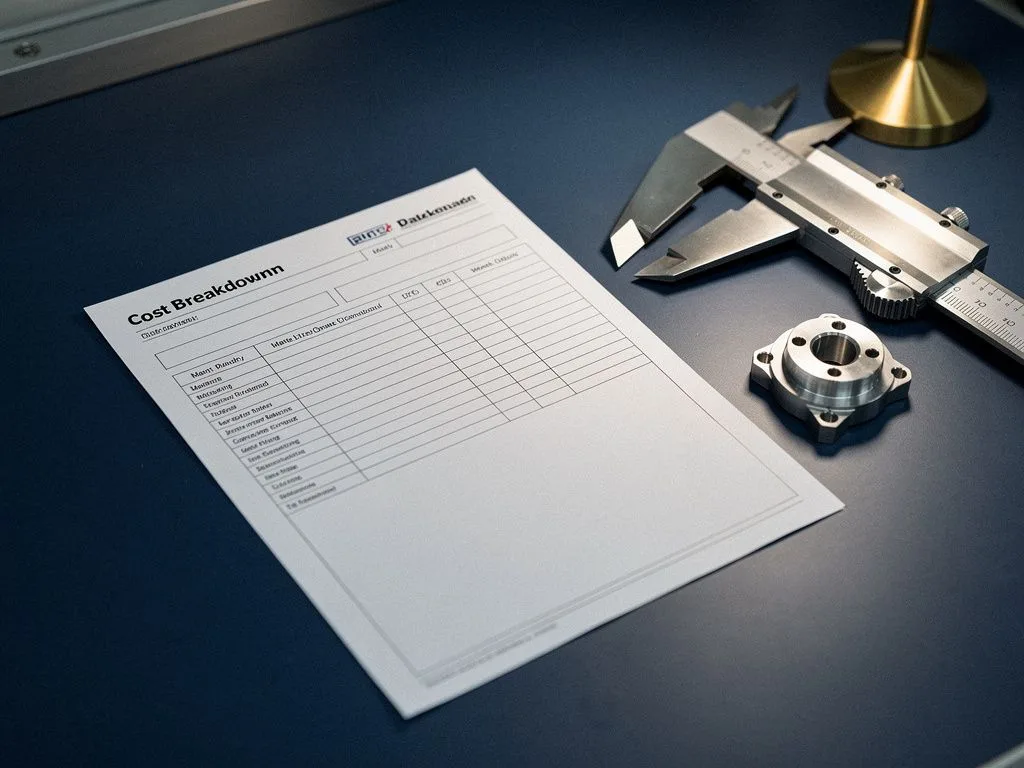
Fixtures and programming are two of the most underestimated costs in CNC machining quotes. Fixtures determine workpiece positioning and repeatability, while programming determines tool paths and machining efficiency. Poor design in either directly shows up in per-part cycle time and defect rates. When requesting quotes, buyers should ask suppliers to list fixture and programming costs separately and clarify whether they are one-time charges or amortized over production runs, so quote structures can be compared across suppliers.
Key Takeaways
Tooling and programming fees should be listed separately
Tooling and programming are costs that are often underestimated in CNC quotes. Buyers should ask suppliers to list them separately and explain the charging method to enable cross-vendor comparison.
Tooling ensures precision and stable mass production
Tooling positions the workpiece in the same spatial coordinates before machining. For small to medium metal parts within 250 mm outer diameter and 500 mm length, it is essential to achieve ±0.007 mm tolerance.
Programming costs are affected by drawings and equipment
3D drawings, five-axis or Swiss-type sliding head machining, and downstream SPC/MSA requirements all increase programming hours. Providing STEP/IGES files can shorten quoting and trial production time.
Amortization and design changes should be agreed in advance
Tooling and programming costs account for a high proportion during trial production and can be amortized in mass production. Whether drawing modifications incur additional rework fees should be confirmed at the quoting stage.
Why CNC Machining Requires Fixtures: What Happens Without Them
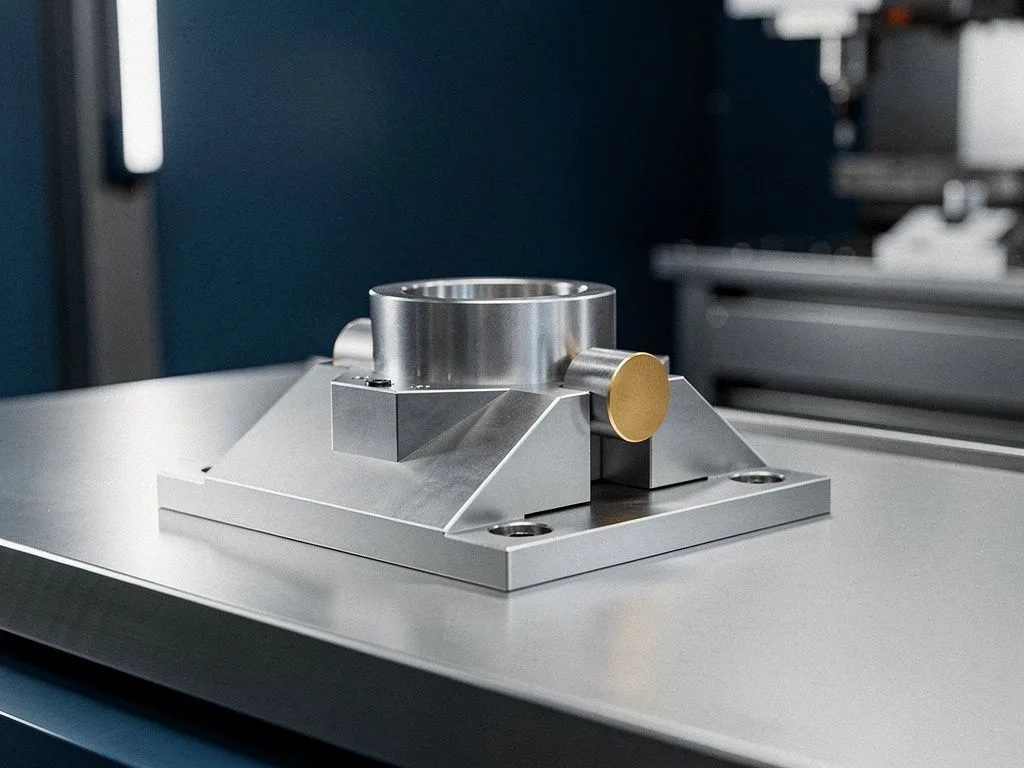
A fixture is a metal clamp or mold base used to secure and position a workpiece during CNC machining. Without a fixture, the tool has no reliable reference origin. For precision metal parts, relying only on a vise or four-jaw chuck often causes workpiece deformation due to uneven clamping force. Parts may measure within tolerance after machining, but assembly reveals interference or excessive clearance. The real value of a fixture is placing every workpiece in the same spatial coordinate before machining, allowing the CNC program to run consistently and reducing defect rates in mass production. Buyers who focus only on low unit price and overlook whether the supplier has designed a dedicated fixture for the part often pay higher rework costs later in production. For small to medium metal parts with outer diameters up to 250 mm and lengths up to 500 mm, a dedicated fixture is essential to consistently achieve ±0.007 mm tolerances.
What CNC Programming Costs Include and Why Quotes Vary by Supplier
CNC programming is not a one-click task. It involves a series of engineering operations: drawing analysis, tool selection, tool path planning, machining sequence arrangement, and cutting simulation with collision checking. Quote differences mainly come from three levels. First, whether the drawing is 2D AutoCAD or 3D UG CAD/CAM—3D model programming takes significantly more time. Second, whether the part requires five-axis or Swiss-type sliding headstock machining, as the programming complexity for such combined machining is far higher than standard three-axis milling. Third, whether downstream SPC statistical process control and MSA measurement system analysis are required, which affects how conservative the machining strategy must be. Buyers who provide STEP or IGES 3D files allow suppliers to import them directly into CAM software such as ESPRIT CAM, shortening quoting and trial production time. Providing only 2D drawings or hand sketches will incur additional drawing reconstruction costs in the quote.
Six Checklist Items for Buyers When Quoting Fixture and Programming Costs
Is the fixture cost listed separately?
Ask the supplier to separate fixture design and manufacturing costs from machining costs to avoid them being bundled into the unit price, which makes comparison difficult.
Is programming a one-time charge or per-piece?
Initial tooling is usually a one-time charge. For subsequent production runs using the same program, confirm that it will not be charged again.
Who owns the fixture?
Confirm whether the finished fixture is kept by the buyer or remains at the supplier's factory, as this affects future transfer and confidentiality.
Can 3D drawing files be provided?
Neutral formats such as STEP, IGES, and Parasolid reduce CAM programming time and lower the risk of drawing misinterpretation.
Will costs be amortized over production?
If fixture and programming costs can be spread over a certain batch size, the per-part cost drops significantly. Buyers should proactively ask about this.
Are design changes charged separately?
Whether fixtures and programs need to be redone after drawing modifications, and how rework costs are calculated, should be clarified at the quoting stage.

What Part Characteristics Actually Determine Fixture Costs
Fixture costs are not arbitrarily set by the supplier; they are determined by the part's geometric features and machining requirements. Common influencing factors include: whether the workpiece is thin (thickness below 3 mm is prone to deformation and requires special clamping fixtures), whether it is an irregular shape (arcs, slopes, and curved surfaces require multi-directional clamping), the production batch size (small trial runs tend to use general-purpose fixtures, while dedicated fixtures are only worthwhile for mass production), and precision requirements (tolerances around ±0.007 mm typically require hardened jaws and locating pin designs). For different materials such as iron, carbon steel, aluminum, copper, FRP, and various alloys, the clamping methods also differ: aluminum parts are easily damaged by pressure and need nylon or copper jaw protection; FRP and alloys require avoiding excessive clamping force to prevent fiber breakage or micro-cracks. If buyers can specify the material, batch size, and precision requirements in advance, suppliers can provide a reasonable fixture cost range rather than responding with "to be confirmed based on actual specifications."
The Relationship Between Programming Costs and Machining Equipment
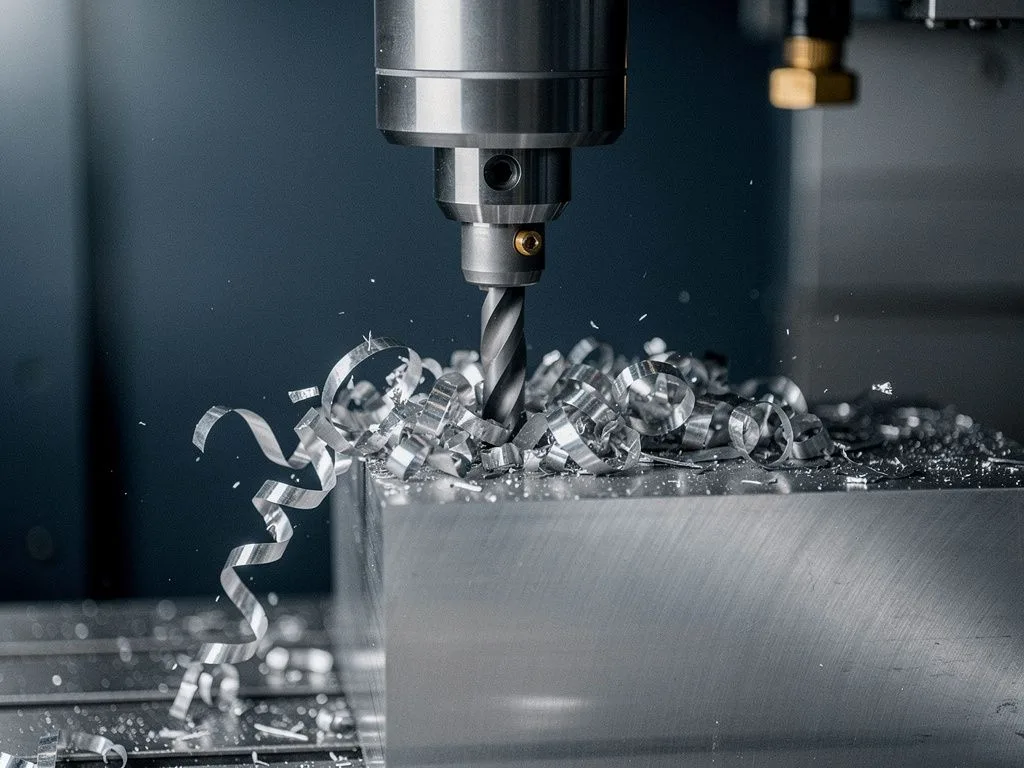
Programming costs vary significantly depending on the class of machining equipment. Different machines—such as Japanese BROTHER machining centers, Swiss Star automatic lathes, CNC milling machines, and Japanese TAKISAWA horizontal lathes—have different controller syntax, post-processors, and maximum spindle speeds, so programs are not directly interchangeable. Because the workpiece continuously moves during Swiss-type sliding headstock machining, the program must account for guide bushings, tool interference, and sub-spindle synchronization, making programming time typically more than twice that of fixed-clamping three-axis milling. For five-axis machining, since the tool vector can rotate arbitrarily, the program requires not only standard cutting paths but also tool length compensation, head tilt angle limits, and collision simulation—this is one reason five-axis parts are generally quoted higher. If buyers specify machining on Swiss Star automatic lathes or five-axis machines, they should understand the programming costs behind this rather than only looking at per-piece cycle time.

How Fixture and Programming Costs Are Amortized in Trial Production vs. Mass Production
The cost structure in the trial production phase (typically 1–50 pieces) is completely different from the mass production phase (several hundred pieces or more). During trial production, fixture and programming costs account for a very high proportion of total costs because these fixed costs must be spread over a small number of workpieces. Once mass production begins, the reduction in per-piece cost mainly comes from the amortization of fixtures and programs. If a buyer only completes a trial run and closes the project, fixture and programming costs are one-time expenses. If the project will proceed to mass production, the amortization method should be discussed with the supplier during the initial quotation—for example, agreeing that once monthly output reaches a certain quantity, the per-piece machining fee can be reduced. For OEM parts suppliers and Tier-1 subcontractors, this amortization logic directly affects annual procurement costs and is a step often overlooked by trial development teams when selecting CNC suppliers.
How Buyers Can Use "Fixture + Programming" to Assess a Supplier's Engineering Capability
The way fixture and programming costs are quoted is actually one indicator of a CNC supplier's engineering capability. Suppliers who can clearly explain the fixture structure, clamping points, machining sequence, and post-processor version typically have a complete engineering team. Suppliers who only provide a lump-sum price without breaking down details often make it difficult to trace the root cause when quality issues arise later. Buyers can start with three questions: First, ask the supplier to explain the fixture clamping point locations and locating datum for the part. Second, ask them to explain the CAM software used for programming and the source of the post-processor. Third, ask them to explain how they verify dimensions and geometric tolerances using a coordinate measuring machine after machining. The quality of the answers to these three questions reflects the supplier's true capability better than simply comparing unit prices, and is consistent with the process control requirements of the ISO 9001:2015 quality management system.
FAQ
Why should tooling and programming fees be listed separately?
Tooling and programming are two of the most underestimated costs in CNC machining quotes. Listing them separately allows cross-vendor comparison of quote structures and confirms whether they are one-time charges or amortized in subsequent mass production, avoiding the difficulty of comparison when bundled into unit prices.
What problems occur without tooling?
Without tooling, the cutting tool has no reliable reference origin. Clamping only with a vise or four-jaw chuck often causes workpiece deformation due to uneven clamping force. Although dimensions may be within tolerance after machining, assembly may show interference or excessive gaps, and the mass production defect rate will increase.
Why do programming fees vary among suppliers?
Quote differences come from whether drawings are 2D or 3D, whether parts require five-axis or Swiss-type sliding head machining, and whether downstream SPC and MSA are performed. 3D models require more hours, and compound machining programs are far more complex than 3-axis milling. Providing only 2D drawings will incur additional drawing reconstruction fees.
Which part characteristics determine tooling costs?
Tooling costs are determined by part geometry and machining requirements, including whether it is a thin part (thickness below 3 mm), whether it is an irregular shape, batch size, and precision requirements. Clamping methods also differ by material: aluminum parts need nylon or copper jaws for protection, while FRP and alloys require avoiding excessive clamping force.
How are tooling and programming costs amortized between trial production and mass production?
During trial production (1–50 pieces), tooling and programming costs account for a very high proportion of total cost. The decrease in per-piece cost after mass production mainly comes from amortization of tooling and programming. If the buyer only does trial production, it is a one-time expense. For mass production, the amortization method should be discussed at the first inquiry, such as reducing the per-piece machining fee after reaching a monthly production target.
Send us your drawings and we'll break down the fixture and programming costs for you
Provide 2D or 3D drawing files, estimated batch size, and precision requirements, and we will itemize fixture costs, programming costs, and machining costs separately so you can clearly see the source of every cost component.