ysl-cnc cost-drivers-2

How Batch Size Changes Unit Price: The Relationship Between Amortization and Cycle Time

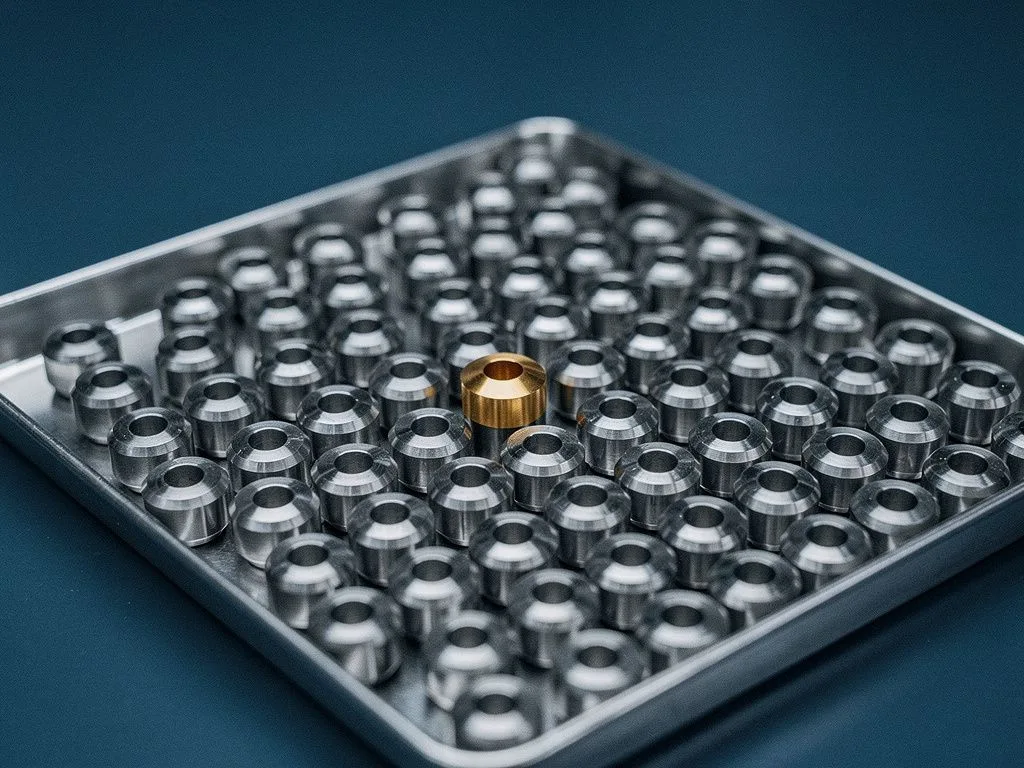
The unit price of CNC machining decreases as batch size increases, but the decrease is not linear. What really determines the unit price are two factors: how many parts the fixed costs (programming, fixtures, first-article inspection, tooling setup) can be spread across, and whether the cycle time per part can be minimized during mass production. When buyers receive a quote, rather than only looking at the total price, they should ask the supplier which costs are listed as one-time fees and which are per-piece fees, so they can determine at what batch size the pricing becomes favorable.
Key Takeaways

  • Batch Amortization and Cycle Time Determine Unit Price

    CNC machining unit price is determined by fixed cost amortization and per-piece cycle time. Larger batch sizes spread one-time costs over more parts, but the decrease is non-linear.

  • Prototype and Production Unit Prices Differ by Three to Five Times

    During prototyping, all one-time labor is absorbed by a small number of parts. As batch size increases to 100 or 500 pieces, unit price drops significantly due to amortization.

  • Cycle Time Optimization Can Substantially Reduce Unit Price

    In mass production, reducing tool change frequency and workpiece change time can cut cycle time from 90 seconds to under 30 seconds, directly impacting per-piece labor cost.

  • Variable Costs Must Be Calculated Per Piece

    Material costs, tool wear, and inspection sampling are variable costs that should not be amortized. They should be priced based on actual specifications, material hardness, and sampling ratio.

Why Can Prototype Unit Prices Be Three to Five Times Higher Than Mass Production Prices?

Prototype unit prices are high because almost all costs have not yet been amortized. From drawing to the first finished part, a new component requires CAM programming, tool path simulation, first-piece trial cutting, CMM measurement, and dimensional feedback corrections. These man-hours occur only once but must be absorbed by that single part or the few parts produced. When the batch size increases from 5 or 10 pieces to 100 or 500 pieces, these one-time costs are spread across a larger denominator, and the unit price naturally drops. At Yuan Shun Li, in CNC turning, milling, and Swiss-type sliding headstock machining, the quotation structure typically lists CAM programming fees, first-article inspection fees, and fixture design fees as one-time items, with the rest being per-piece machining costs. Buyers can use this to determine which batch size range their order falls into.

How Much Can Cycle Time Optimization Lower the Unit Price?

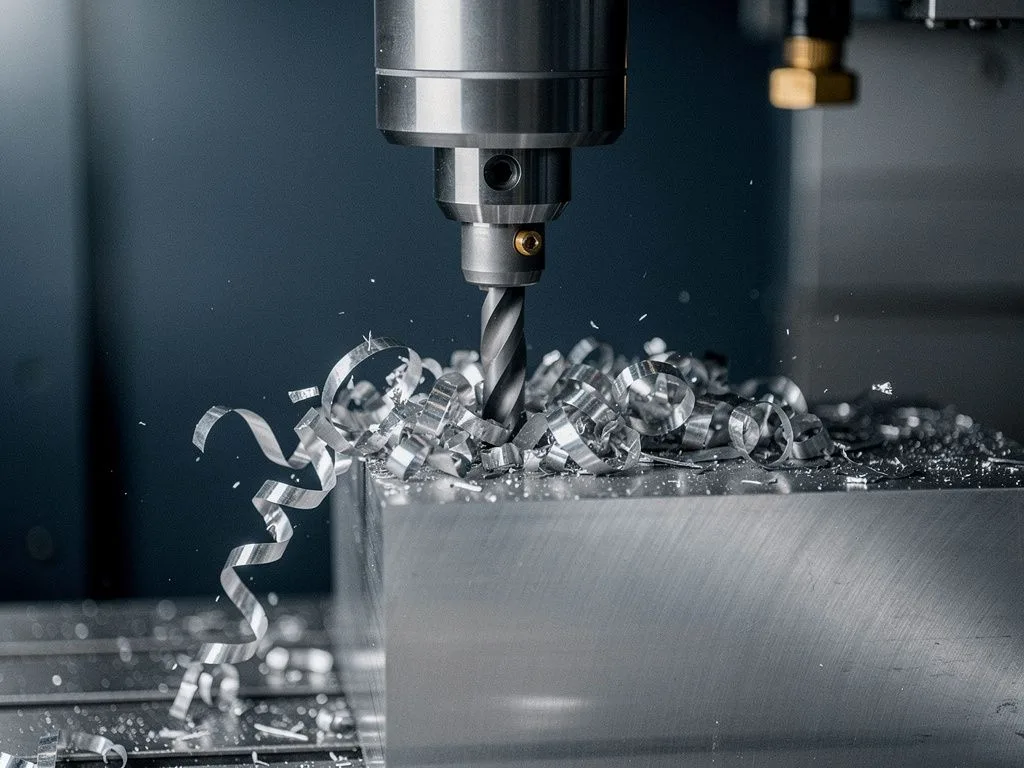
Cycle time is the total time from clamping a part onto the machine to completing the cutting process, including cutting time, rapid traverse, tool changes, and workpiece changes. During mass production, the main areas that can be optimized are the latter two: tool change frequency can be reduced through tool consolidation and path optimization, and workpiece change time can be shortened through standardized fixtures and automated bar feeders. Taking Swiss-type lathe machining of small precision parts as an example, the cycle time per part during prototyping may be around 90 seconds, but after mass production optimization it can be reduced to under 30 seconds. The unit price difference is directly reflected in the per-piece labor cost. If buyers can provide annual demand and delivery cadence, suppliers can more easily plan continuous production batches to minimize the cost associated with production rhythm.

cost drivers scene 1

Which Costs Should Not Be Amortized and Must Be Calculated Per Piece?

Material costs, tool wear, and inspection sampling are variable costs and should be calculated per piece. Material costs are confirmed based on actual specifications; the unit prices of carbon steel, aluminum, copper, and alloys vary significantly. If buyers specify the material grade, the quotation can be locked in. Tool wear varies with cutting parameters and material hardness; tooling costs for hard materials and high-tolerance parts will be noticeably higher, which is why the same geometry can result in a doubled unit price when the material is changed. The density of quality inspection sampling depends on the batch size and the buyer's acceptance specifications. During mass production, if the buyer requires 100% inspection or AQL sampling, the unit price will reflect the additional man-hours. This portion should not be amortized but calculated based on the actual sampling ratio.
Six Items Buyers Should Review When Evaluating Batch Unit Prices

  • Whether one-time costs are itemized separately

    CAM programming, first-article inspection, and fixture design should be quoted separately from the per-piece machining cost so the amortization basis is clear.

  • The basis for calculating per-piece cycle time

    Cycle time should be provided by the supplier, covering cutting, tool change, and workpiece change segments, rather than being glossed over as an 'experience-based estimate.'

  • How material costs are locked in

    Specifying the material grade and specification in the quote avoids disputes over unit price adjustments caused by later material price fluctuations.

  • The logic for allocating tool wear costs

    Hard materials and high-tolerance parts incur higher tooling costs; confirm whether these are reflected in the unit price rather than absorbed by the supplier.

  • The impact of inspection sampling density on pricing

    The labor costs for 100% inspection, AQL sampling, and first-article and last-article checks should be agreed upon in advance and reflected in the unit price.

  • Batch size thresholds and price breaks

    When requesting a quote, proactively provide the estimated annual usage and per-batch quantity so the supplier can offer corresponding price breaks.

Under what circumstances will unit prices not drop even with larger batch sizes?

Three situations reduce the benefit of batch size on unit price. First, overly complex geometry results in long per-piece cycle times, compressing the amortization effect. Second, tight tolerances—such as a combination of precision tolerance 0.007 mm and surface roughness Ra 0.3 µm—require longer measurement and cutting time per piece, leaving limited room for cycle time optimization. Third, special materials like FRP or high-hardness alloys cut slowly and wear tools quickly, making variable costs inherently high. In these cases, rather than pursuing larger batches, buyers should discuss design simplification, process consolidation, or tolerance rationalization with the supplier to truly lower unit costs. Yuan Shun Li, with capabilities in CNC turning, milling, five-axis, and Swiss-type sliding-head machining, can recommend the most suitable process based on part characteristics, helping buyers avoid paying extra due to selecting the wrong machining method.

Quotation Process

  1. 1

    Prepare Complete Drawing Documentation

    Provide 2D/3D drawings (STEP or IGES preferred), specified material grade, key dimensions with tolerance callouts, and surface roughness requirements.

  2. 2

    Provide Batch Size and Delivery Information

    Inform estimated annual usage, quantity per batch, delivery cadence, and whether specific acceptance specifications such as PPAP or first article inspection reports are required.

  3. 3

    Send Information to Receive Tiered Quotation

    Send drawings and batch information to the designated email or call. The supplier will provide corresponding one-time costs and per-piece unit price tiers based on the process.

cost drivers scene 2

How should buyers prepare RFQ information to get accurate batch price breaks?

The completeness of RFQ information directly affects the accuracy of the quote and the granularity of price breaks. Buyers should prepare 2D/3D drawings (STEP or IGES preferred), specified material grades, key dimensions with tolerance callouts, surface roughness requirements, estimated annual usage and per-batch quantities, delivery cadence, and any specific acceptance requirements (such as PPAP or first-article inspection reports). The more complete the information, the better the supplier can confirm cycle times and cost structures based on actual specifications, resulting in price breaks that closely match reality. Yuan Shun Li uses AutoCAD 2D and UG CAD/CAM to receive drawings, with ESPRIT CAM for tool path planning. Providing electronic drawing files accelerates the quoting process and avoids dimensional errors from manual data entry.

Why is a lower unit price not always better?

An unusually low unit price typically hides three risks: compressed tooling and inspection costs leading to unstable quality, overestimated cycle times causing delivery delays, or one-time costs being absorbed initially and then raised on subsequent orders. To judge whether a quote is reasonable, buyers should cross-check four factors: unit price, one-time costs, cycle time assumptions, and inspection methods for consistency. Under its ISO 9001:2015 quality system, Yuan Shun Li follows standard procedures for incoming inspection, in-process checks, and final inspection before shipment, and is equipped with 3D CMM measurement and MSA/GR&R/SPC quality methods. These costs are reflected in the unit price structure, allowing buyers to assess whether the quote covers complete quality assurance.

FAQ

Why can prototype unit prices be three to five times higher than production unit prices?

During prototyping, almost all costs have not yet been amortized. One-time tasks such as CAM programming, first-piece trial cutting, and CMM measurement occur only once but are absorbed by a small number of parts. When batch size increases from 5 or 10 pieces to 100 or 500 pieces, these one-time costs are spread over a larger denominator, so unit price naturally decreases.

How much can cycle time optimization reduce unit price?

For example, when machining small precision parts on a Swiss-type automatic lathe, the cycle time per piece may be around 90 seconds during prototyping. After production optimization, it can be reduced to under 30 seconds, and the unit price difference is directly reflected in per-piece labor cost. In mass production, the main focus is on reducing tool change and workpiece change time.

Which costs should not be amortized and must be calculated per piece?

Material costs, tool wear, and inspection sampling are variable costs that should be calculated per piece. Material is confirmed based on actual specifications, tool wear varies with cutting parameters and material hardness, and QC sampling density is determined by batch size and acceptance specifications. These should not be amortized.

Under what circumstances will unit price not decrease even with larger batch sizes?

There are three situations: geometry too complex leading to long per-piece cycle time, tolerances too tight such as a combination of 0.007mm and Ra0.3µm, and special materials like FRP or high-hardness alloys. In these cases, you should discuss design simplification, process consolidation, or tolerance rationalization with the supplier.

Why is a lower unit price not always better?

An excessively low unit price usually hides three risks: compressed tooling and measurement leading to unstable quality, underestimated cycle time causing delivery delays, and one-time costs being absorbed initially but then increased on additional orders. You should cross-check whether unit price, one-time costs, cycle time assumptions, and QC methods are consistent.

Send Drawings and Quantities for Tiered Quotation

Send 2D/3D drawings, estimated annual usage, and per-order quantities to [email protected], or call +886-4-2534-5219. Yuan Shun Li will provide corresponding one-time tooling costs and per-piece price tiers based on processes including CNC turning, milling, five-axis, and Swiss-type turning.