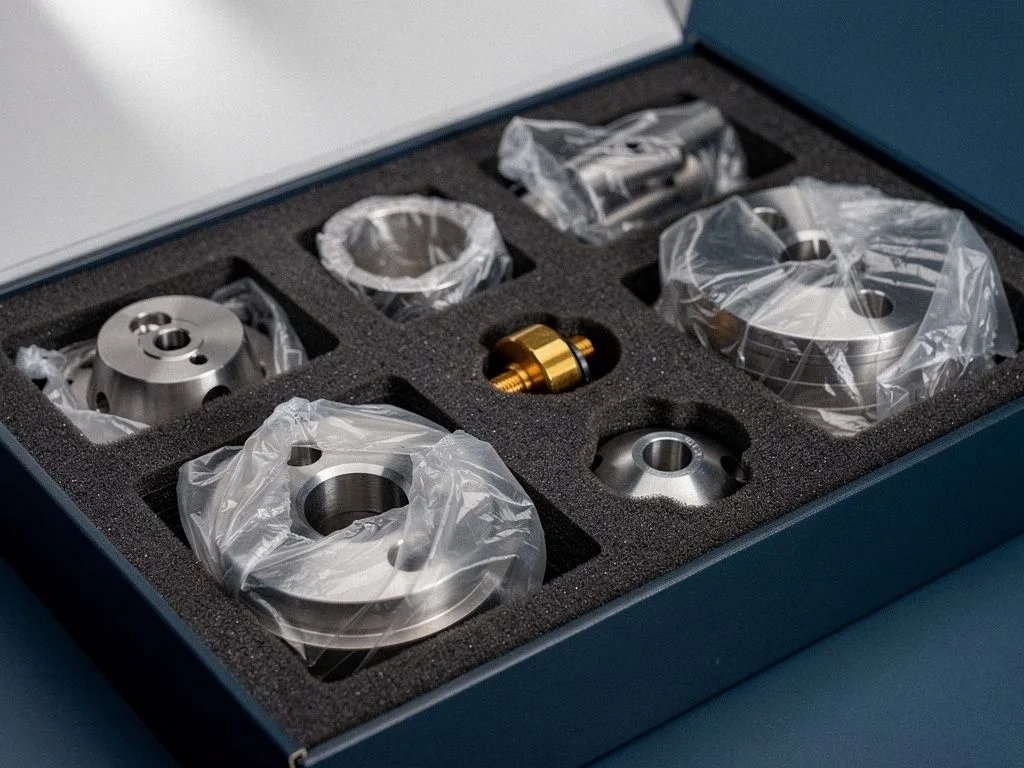
How should buyers specify packaging and rust prevention requirements for CNC precision parts in advance?
There is no single standard answer for packaging and rust prevention requirements for CNC precision parts; they depend on the material, batch size, shipping method, and destination climate. Buyers should include shelf life, export region (humid ocean freight or dry land transport), maximum weight per carton, and unpacking method in the procurement specification during the RFQ stage. Suppliers should then respond with the type of rust preventive oil, vacuum bag specifications, inner cushioning, and outer carton material. Both parties should confirm in writing before shipment to avoid rust on arrival, dimensional disputes, or return and re-inspection.

Key Takeaways
Packaging and rust prevention must be agreed in advance
Packaging and rust prevention requirements for CNC precision parts depend on material, batch size, shipping method, and destination climate. Buyers should include shelf life, export region, maximum weight per carton, and unpacking method in the procurement specification during the inquiry stage.
Rust prevention on precision parts affects dimensions
Tolerances for CNC precision parts often fall within ±0.01mm or even ±0.007mm. Surface oxidation spots or fingerprint corrosion can push dimensions beyond acceptable limits, affecting subsequent assembly and functional testing.
Sea freight carries high risk and requires long-term rust prevention
Sea freight is the most common export method for precision parts but carries the highest risk. Day-night temperature differences inside containers cause condensation, and relative humidity often remains high. Rust prevention must be designed for prolonged humid and hot conditions.
Packaging documentation prevents disputes
Before shipment, suppliers should provide packaging method instructions, wood crate fumigation certificates, a per-carton list of part numbers, batch numbers, quantities, and weights, plus storage and unpacking recommendations. These serve as the most important tools for preventing disputes between buyers and suppliers.
Why do CNC precision parts require more rust prevention planning than general machined parts?
CNC precision parts typically have tolerances within ±0.01 mm or even ±0.007 mm. If oxidation spots or fingerprint corrosion appear on the surface, it can directly push dimensions out of the acceptable range, affecting subsequent assembly and functional testing. Common iron-based, copper-based, and aluminum-based materials used in precision parts react differently to humidity and salt: carbon steel may develop red rust within days after relative humidity exceeds a certain threshold; aluminum alloys form white spots that do not affect dimensions but impact appearance and electrical conductivity; copper alloys discolor in sulfur-containing environments. This is why buyers cannot simply ask 'is it packaged?' but must include shelf life, transport conditions, and post-unpacking handling in the specification. If the supplier can provide a rust prevention measures comparison table before shipment, buyers can verify on receipt whether it meets expectations.
How do packaging and rust prevention requirements differ across ocean freight, air freight, and land transport?
Ocean freight is the most common export method for CNC precision parts, but it also carries the highest risk: temperature differences between day and night inside the container cause condensation, and relative humidity often remains high during the voyage. Therefore, rust prevention must be designed for a 'long-term hot and humid environment.' Air freight has a short transit time and less humidity variation, but when unit prices are high and quantities are small, buyers often require individual vacuum sealing for each piece to avoid fingerprint contamination during warehousing and transshipment. Land transport or express delivery falls between the two, with the focus on cushioning and impact protection rather than long-term rust prevention. If buyers only write 'please package properly' on the RFQ, suppliers cannot determine which level to use. Clearly specifying the transport method, estimated transit days, and destination climate zone allows packaging costs and rust prevention effectiveness to be balanced.

How should rust preventive oil, vacuum bags, and desiccants be combined appropriately?
Rust preventive oils are divided into three categories based on film-forming characteristics: hard film, soft film, and volatile. Hard film is suitable for parts requiring long-term ocean transport and subsequent machining; soft film is suitable for short-term storage and direct assembly; volatile film is commonly used for precision shafts and mirror-finished parts. The thickness and moisture vapor transmission rate of vacuum bags must correspond to the shelf life: thinner specifications can be used for short-term ocean transport, while thicker composite films with desiccants are needed for long-distance transoceanic shipments. The amount of desiccant is calculated based on container or carton volume—it is not 'the more the better'—excess desiccant can absorb the oil vapor needed by the rust preventive film. If buyers specify 'no silicone-containing rust preventive oil' or 'must meet RoHS restrictions,' they should raise this during the RFQ stage to avoid delays caused by changing requirements just before shipment.

Six Essential Checks for Packaging and Rust Prevention of CNC Precision Parts
Segregation by Material and Surface Finish
Carbon steel, copper, and aluminum parts must not be mixed in the same sealed bag to avoid galvanic corrosion; mirror-finished parts should be packaged separately from standard parts.
Written Confirmation of Rust Preventive Oil Type
Before shipment, documentation must specify the oil grade, film-forming characteristics, and whether it contains silicone, to avoid affecting subsequent machining or coating processes.
Vacuum Bag and Desiccant Specifications
Select film thickness and moisture vapor transmission rate based on the required shelf life; calculate desiccant quantity based on box volume and mark its expiration date.
Cushioning and Per-Box Weight
Use foam, EPE, or bubble wrap as inner lining to absorb vibration; the maximum weight per box must comply with handling and pallet load capacity.
Outer Carton and Wooden Case Fumigation
For exports to markets requiring fumigation certificates, wooden cases must comply with ISPM 15 and display the treatment mark.
Labeling and Unpacking Instructions
Mark part number, batch number, weight, and "This Side Up" on the outside of the box; include unpacking steps and recommendations for removing rust preventive oil inside.
What Packaging Conditions Should Buyers Specify in an RFQ?
In a complete RFQ for CNC parts, the packaging section should at least include: shelf life (in months or years), shipping method (sea, air, or land), destination country or climate zone, maximum weight per box, whether individual vacuum sealing is required, whether certain rust preventive oil ingredients are prohibited, outer box material (cardboard, wooden case, reinforced corrugated), whether an ISPM 15 fumigation certificate is required, and how the receiving end will handle parts after unpacking (cleaning, retaining the oil film, or direct assembly). If a buyer only provides 2D drawings without the above information, the supplier can only quote based on "standard packaging," and subsequent additional requirements often lead to delivery delays and extra costs. Including packaging conditions together with technical drawings, material certificates, and inspection specifications in the same RFQ is the most effective way to shorten the quotation cycle.
Unpacking Inspection Process at Port
- 1
Check vacuum bag condition
Check whether vacuum bags have holes or resealing marks and whether the desiccant inside is still effective.
- 2
Observe part surfaces
Observe part surfaces for fingerprints, flow marks, or localized discoloration, which usually result from insufficient cleaning before packaging or bare-hand contact.
- 3
Measure critical dimensions
Measure critical dimensions to see if they still fall within acceptable tolerances, especially for precision shafts and bore diameters after long sea freight.
- 4
Compare packing list
Compare the packing list with actual part counts and batch numbers to confirm the shipment contents are correct.
- 5
Test cleaning method
If rust preventive oil must be cleaned before subsequent processing, test the cleaning method during the sample stage to ensure it does not damage surfaces or leave residual oil film.

How Should Buyers Verify Rust Prevention During Incoming Inspection?
Incoming inspection is not just about taking parts out of the box; there are fixed steps to verify whether rust prevention was effective. First, check vacuum bags for holes or signs of resealing, and confirm the desiccant inside is still effective. Second, inspect part surfaces for fingerprints, flow marks, or localized discoloration, which usually indicate insufficient cleaning before packaging or bare-hand contact. Third, measure critical dimensions to ensure they still fall within the acceptable tolerance, especially for precision shafts and bores after long sea freight. Fourth, compare the packing list with the actual part count and batch numbers. Fifth, if the rust preventive oil needs to be cleaned before subsequent processing, test the cleaning method during the sample stage to ensure it does not damage the surface or leave residual film. These five steps allow the receiving end to quickly determine whether packaging is acceptable and serve as a basis for adjusting packaging specifications in future RFQs.
What Packaging Documents Should Suppliers Provide Before Shipment?
Packaging documents provided before shipment are the most important tool for preventing disputes between buyers and suppliers. Complete documentation should include: a packaging method description (rust preventive oil grade, vacuum bag specifications, desiccant quantity, cushioning material), a wooden case fumigation certificate or IPPC mark (if wooden cases are used), a comparison table of part number, batch number, quantity, and weight for each box, and storage and unpacking recommendations. For orders involving long sea freight or special climate regions, additionally providing the rust preventive oil MSDS and a shelf life statement allows the buyer's warehouse and quality assurance teams to directly cross-reference internal specifications. If a supplier only provides a commercial invoice and packing list without the above technical documents, the buyer will find it difficult to determine whether packaging meets the original agreement upon receipt, and it will also be difficult to clarify responsibility if corrosion occurs later.
How should packaging and rust-prevention specifications be continuously improved in a long-term partnership?
Packaging and rust prevention are not one-time decisions but specifications that should be continuously adjusted as the partnership deepens. In the first collaboration, buyers and suppliers typically follow standard practices, then gradually refine them based on actual arrival conditions, storage duration, and subsequent processing methods. For example, if buyers find that additional derusting is needed after sea freight arrives, it indicates that the rust-preventive oil grade or desiccant quantity is insufficient. If residual oil film after unpacking affects subsequent painting, a volatile or water-soluble rust-preventive oil should be used instead. Records from each arrival inspection, customer complaints, and corrective actions should all be fed back into the next procurement specification. If suppliers proactively offer packaging improvement suggestions—such as switching to thinner vacuum bags to reduce freight costs or using recyclable cartons to meet buyers' ESG requirements—both parties can build long-term trust in the packaging process.
FAQ
What packaging conditions should be clearly stated on the inquiry form?
The packaging section of the inquiry form should at least include shelf life, shipping method, destination country or climate zone, maximum weight per carton, whether individual vacuum sealing is required, whether certain rust preventive oil ingredients are prohibited, outer carton material, whether an ISPM 15 fumigation certificate is required, and how the receiving end should handle the parts after unpacking.
How do packaging and rust prevention requirements differ between sea, air, and land freight?
Sea freight requires rust prevention designed for prolonged humid and hot conditions. Air freight has shorter transit times and less humidity variation, so buyers often require individual vacuum sealing for each piece. Land freight or courier services focus on cushioning and impact protection rather than long-term rust prevention.
How should rust preventive oil, vacuum bags, and desiccants be combined?
Rust preventive oils are classified by film-forming characteristics into hard film, soft film, and volatile types. Hard film suits long-term sea freight, soft film suits short-term storage, and volatile film is used for precision shafts and mirror-finished parts. Vacuum bag thickness and moisture vapor transmission rate must correspond to the shelf life. Desiccant dosage is calculated based on volume—more is not always better.
How should unpacking inspection verify that rust prevention was effective after arrival at port?
Check whether vacuum bags have holes or resealing marks and whether desiccants are still effective. Observe part surfaces for fingerprints, flow marks, or localized discoloration. Measure critical dimensions to see if they remain within acceptable tolerances. Compare the packing list with actual part counts and batch numbers. If rust preventive oil needs to be cleaned off, test the cleaning method during the sample stage.
What packaging documents should suppliers provide before shipment?
Documents should include a packaging method instruction sheet (rust preventive oil type, vacuum bag specifications, desiccant dosage, cushioning material), wood crate fumigation certificate or IPPC marking, a per-carton list of part numbers, batch numbers, quantities, and weights, and storage and unpacking recommendations. For long-term sea freight orders, additionally attach the rust preventive oil MSDS and a shelf life statement.
Include packaging and rust-prevention conditions in your RFQ to speed up quoting and arrival inspection
Please send the shelf life, shipping method, destination climate, rust-preventive oil restrictions, and outer box specifications, along with 2D drawings and material requirements, to [email protected], or call +886-4-2534-5219 to discuss with the Yuan Shun Li sales team.