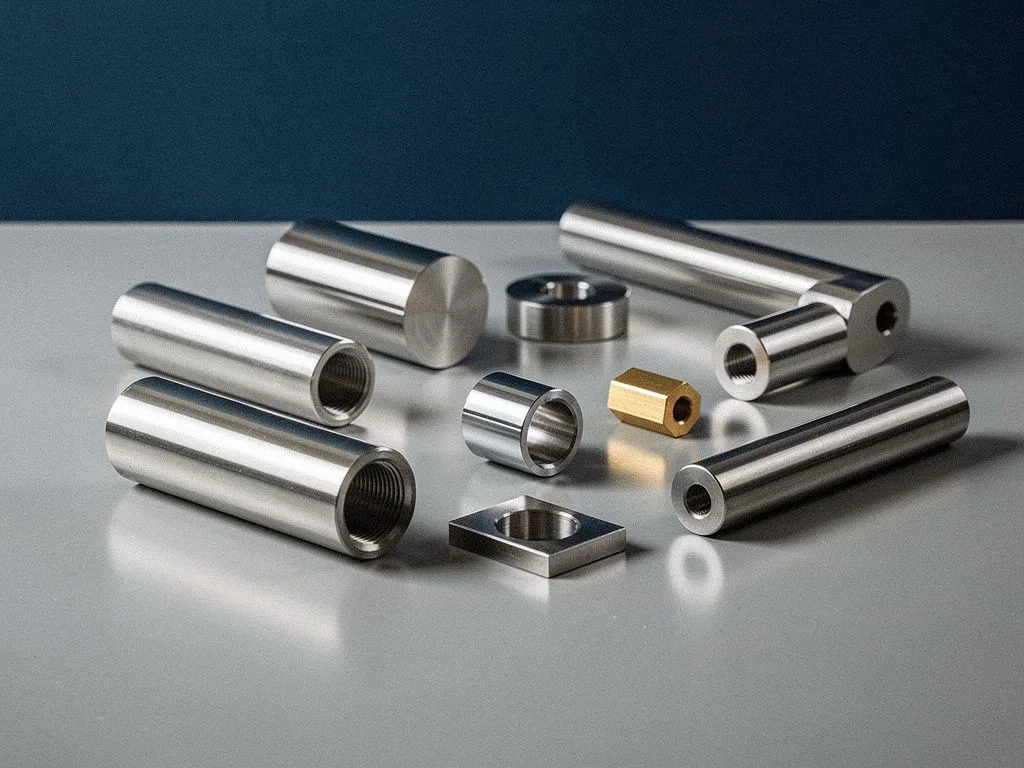
ysl-cnc surface-finishing-2

Differences Between Electroplating and Electroless Nickel Plating and When to Use Each

The difference between electroplating and electroless nickel plating lies in the film formation method and coating uniformity: electroplating uses an applied current to reduce and deposit metal ions, producing thicker coatings on conductive areas, but complex geometries, grooves, and blind holes are prone to thickness variation; electroless nickel (EN) relies on autocatalytic reduction on the workpiece surface without requiring current, providing uniform coating in internal holes, grooves, and blind holes, with hardness and corrosion resistance generally superior to conventional electroplated nickel, though chemical costs and process time are higher. The choice should be based on a combined assessment of workpiece geometry, functional requirements, and budget, and the impact of surface treatment on final tolerances should be confirmed with the machining partner during the CNC prototyping stage.

Key Takeaways

  • Deposition method determines coating uniformity

    Electroplating relies on applied current, so conductive areas get thicker coatings and complex geometries can have thickness variations; electroless nickel uses autocatalytic reduction, providing uniform coating in internal holes, recesses, and blind holes.

  • Electroless nickel offers better hardness and corrosion resistance

    Electroless nickel can reach HV 500–900, and high-phosphorus electroless nickel has better corrosion resistance than electroplated nickel, often replacing hard chrome; electroplated nickel hardness is about HV 150–250.

  • Complex geometries favor electroless nickel

    Deep holes, blind holes, sharp internal corners, and other low-current areas are prone to insufficient coating, so electroless nickel is preferred; electroplating can be chosen for flat or external cylindrical parts requiring specific luster.

  • Allowance for coating thickness in tolerances

    Coating thickness is typically 5–25 µm per side. For precision tolerance parts, specify dimensions before or after plating, and adjust tool compensation based on actual measurements during prototyping.

What is the difference in film formation principles between electroplating and electroless nickel plating?

Electroplating uses the workpiece as the cathode and passes a direct current to reduce and deposit metal ions from the plating solution onto the workpiece surface. Coating thickness is directly related to current density and conductive area, so the more complex the shape and the deeper the holes, the more pronounced the thickness variation, often requiring auxiliary anodes or shielding fixtures. Electroless nickel (EN) does not require an applied current; instead, it relies on a pre-activated nickel-phosphorus or nickel-boron alloy layer on the workpiece surface as a catalyst, allowing nickel ions in the solution to continuously autocatalytically reduce. The entire immersed surface grows at the same rate, so coating thickness in internal holes, grooves, thread roots, and blind holes is nearly consistent with that on visible surfaces. This difference directly determines the suitability of the two processes for precision CNC parts: electroplating is suitable for parts with primarily visible conductive surfaces and relatively simple geometry, while electroless nickel is better suited for parts with complex geometry and functional surfaces requiring uniform coating, such as hydraulic fittings, sensor housings, precision bushings, and optical mechanism components.

How much do coating hardness, corrosion resistance, and appearance differ?

Conventional electroplated nickel (bright or matte nickel) has a hardness of approximately HV 150–250, while electroless nickel can reach HV 500–900 depending on phosphorus content. High-phosphorus electroless nickel typically outperforms electroplated nickel in salt spray testing and is often used as a replacement for hard chromium to combine wear resistance and corrosion protection. Electroplated chromium offers high hardness and stable surface gloss, but the coating is thin and less uniform, and complex parts are prone to missing or thin coating in 'low-current areas' at recesses. Electroless nickel has a slightly matte, uniform silver-white appearance, and color consistency is easier to control than with electroplating; however, if a highly mirror-like finish or a specific color is required, an additional decorative electroplating step is necessary. For precision CNC parts, hardness differences directly affect subsequent assembly engagement, snap-fit performance, and wear life. It is recommended to provide the operating environment (humidity, contact media, friction conditions) to the machining partner and surface treatment supplier during the quotation stage for evaluation.

surface finishing scene 1

Which workpiece geometries are suitable for electroless nickel, and which should still use electroplating?

Workpieces with deep holes, blind holes, sharp internal recesses, thread roots, or internal cavities with a high length-to-diameter ratio should prioritize electroless nickel, because these areas are low-current zones in electroplating where the coating may be insufficient or even absent, making them prone to corrosion or wear during subsequent use. Conversely, if the workpiece consists mainly of flat surfaces, external diameters, and shallow grooves, and requires a specific metallic luster (chromium, zinc, tin, gold, silver) or electrical conductivity/solderability, electroplating remains the more cost-effective and efficient choice. A common practical compromise is 'electroless nickel base + decorative electroplating,' where electroless nickel provides a uniform base layer followed by a thin chromium or gold coating to combine appearance and functionality—this is also a specification adopted by many OEM component suppliers for Tier-1 orders. It is recommended to provide the 3D drawing and critical dimension callouts to the machining partner during the RFQ stage, allowing them to recommend the most suitable process combination based on geometry and function.
How should surface treatment allowances be planned for CNC tolerances and dimensions?

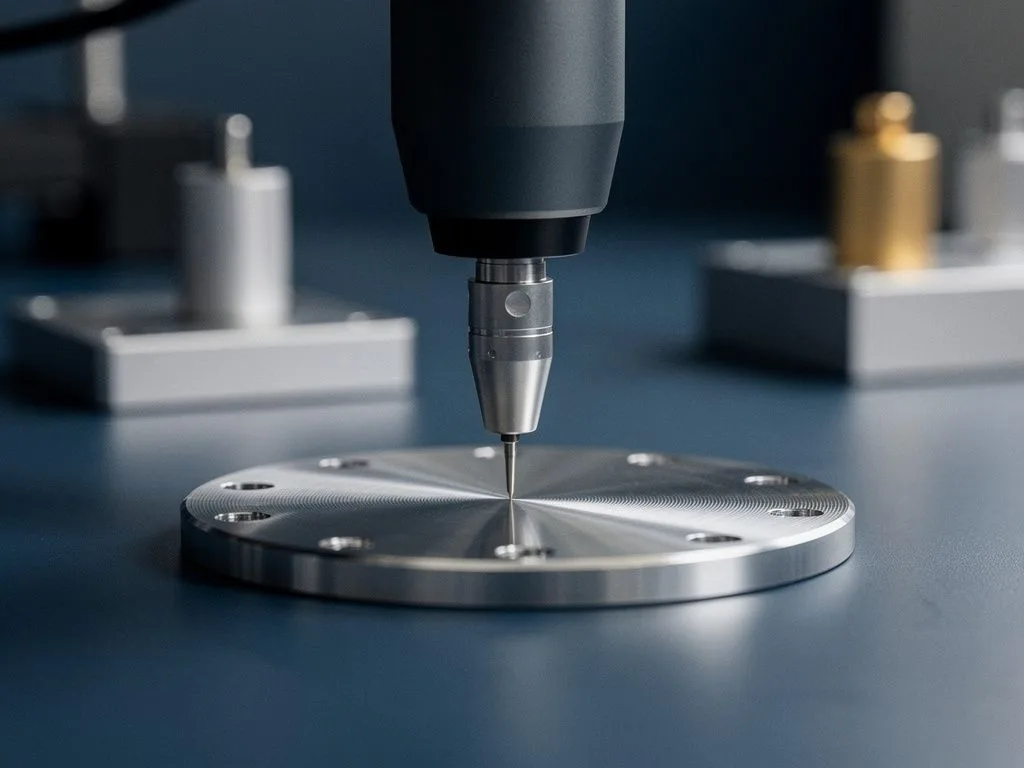
Plating and electroless nickel both add a coating layer to the workpiece surface, typically around 5–25 µm per side depending on the process and specification. This layer thickness must be allowed for during CNC machining, otherwise the finished dimensions will exceed the upper tolerance limit. For precision-turned and milled parts with tolerances at the 0.007 mm level, if the coating thickness takes up more than one-third of the tolerance band, the drawing must clearly specify "dimensions before plating" or "dimensions after plating," and the coating thickness range must be agreed with the surface treatment supplier. Electroless nickel provides a uniform coating, making dimensional allowances relatively straightforward. Electroplating, however, has greater thickness variation, so for critical dimensions (such as mating surfaces, sealing surfaces, and bearing seats) it is recommended to measure the post-plating dimensions during the trial run stage and feed the results back to the CNC side for tool compensation adjustment. At Yuan Shun Li, during the trial run stage we reserve machining allowances according to the coating specification specified by the customer, and before shipment we use CMM measurement to confirm that critical post-plating dimensions remain within tolerance. This is an essential verification step that cannot be omitted before mass production of OEM parts.

Quotation and Prototyping Process

  1. 1

    Prepare drawings and specifications

    Provide complete information such as 3D model, 2D engineering drawing, material, annual usage, functional requirements, and operating environment.

  2. 2

    Evaluate process combination

    The machining supplier recommends electroplating or electroless nickel based on workpiece geometry and function; if necessary, use electroless nickel as a base layer plus decorative electroplating.

  3. 3

    Allow for coating dimensions

    Reserve machining dimensions according to the coating thickness specification and mark dimensions before or after plating on the drawing.

  4. 4

    Prototype and feedback

    During prototyping, measure key dimensions after coating and provide feedback to the CNC side to adjust tool compensation.

  5. 5

    Pre-shipment inspection

    Use CMM to verify that key dimensions after coating are within tolerance, and complete incoming, in-process, and final inspections.

surface finishing scene 2

How do cost, lead time, and environmental restrictions affect the choice?

Electroplating is a mature process with high production capacity and lower unit cost, making it suitable for high-volume parts with simple geometry. Electroless nickel has a limited bath life and a longer process time (typically 1–3 hours depending on thickness), with a higher unit cost, but for parts with complex geometry it can save on rework or scrap costs downstream, so the overall TCO is not necessarily higher. In terms of lead time, electroplating lines are generally abundant in Taiwan's metal surface treatment clusters, so urgent orders are more feasible. Electroless nickel requires a qualified supplier with EN capacity and bath management, so more buffer should be built into the schedule. In terms of environmental and regulatory considerations, electroplating often involves regulated substances such as hexavalent chromium and cyanide, and certain industries (medical, food, children's products, automotive interiors) have restricted their use. Electroless nickel is relatively more environmentally friendly, but it still generates nickel-containing waste solution that must be treated by a qualified wastewater treatment facility. When requesting a quote, it is recommended to provide the industry and destination country at the same time, so that the machining and surface treatment suppliers can determine whether hexavalent-chromium-free, cyanide-free processes or RoHS/REACH-compliant specifications are required.

What information should buyers provide to the machining supplier during the RFQ and trial run stage?

To enable the CNC machining supplier and the surface treatment facility to provide a usable specification at the first quotation, it is recommended that buyers prepare the following information at the RFQ stage: 3D model of the workpiece (STEP or IGES) and 2D engineering drawing (including tolerances and surface roughness), applicable material (iron/carbon steel, aluminum, copper, alloys, etc.), estimated annual usage and batch size, functional requirements (corrosion resistance, hardness, conductivity, welding, decorative appearance), operating environment (contact media, temperature, salt spray hours required), destination country and industry regulatory restrictions (RoHS, REACH, FDA, automotive interiors, etc.), and whether ISO 9001 quality system and measurement reports are required. The more complete the information provided, the less likely it is that coating specification and tolerance conflicts will be discovered only after trial production, leading to rework. Yuan Shun Li accepts CNC orders from trial run to mass production, and can reserve machining dimensions according to the coating and functional requirements specified by the customer, completing incoming inspection, in-process inspection, and final inspection before shipment.

Six checkpoints to review before choosing electroplating or electroless nickel

  • Workpiece geometry complexity

    For deep holes, blind holes, and sharp internal corners, electroless nickel is preferred; for parts mainly with flat surfaces and external diameters, electroplating can be considered.

  • Coating uniformity requirements

    When functional surfaces require consistent thickness, electroless nickel is superior to electroplating, avoiding thin coating in low-current-density areas.

  • Hardness and wear resistance requirements

    High-phosphorus electroless nickel can reach HV 500–900 and is commonly used to replace hard chrome where both wear resistance and corrosion protection are needed.

  • Appearance and color requirements

    For specific finishes such as mirror chrome, gold, or silver, electroplating or electroless nickel base plus decorative plating is used.

  • Tolerance and dimensional allowances

    For precision-tolerance parts, the drawing must specify dimensions before or after plating, and actual measurements must be fed back during the trial run stage.

  • Cost, lead time, and regulations

    Evaluate unit price, production capacity, industry restrictions (RoHS/REACH/medical), and destination country requirements.

What can a CNC machining provider help with in surface finishing?

The role of the CNC machining provider in surface finishing is often underestimated, but there are actually stages where they can get involved from prototyping to mass production: during the prototyping stage, the machining provider can reserve machining dimensions based on the coating thickness specified by the customer to avoid exceeding tolerances after plating; during mass production, the machining provider can recommend suitable pretreatment and coating combinations based on material characteristics (such as aluminum alloy, copper alloy, FRP), and coordinate fixture design and masking scope with the surface finishing vendor; before shipment, if the machining provider is equipped with a coordinate measuring machine, they can perform post-plating critical dimension inspections and provide measurement reports. Yuan Shun Li is equipped with a 3D CMM and MSA/GR&R/SPC quality control methods, carrying out three-stage inspections at incoming materials, during processing, and before shipment, allowing post-plating dimensions and appearance specifications to be confirmed at the CNC shipping end, reducing the risk of returns due to specification mismatches discovered after the buyer receives the goods.

FAQ

What is the difference in deposition principles between electroplating and electroless nickel?

Electroplating uses the workpiece as a cathode with direct current, causing metal ions to reduce and deposit on conductive areas; the more complex the shape, the more obvious the thickness variation. Electroless nickel requires no applied current; it relies on autocatalytic reduction on the workpiece surface, so the entire immersed surface grows at the same rate, resulting in uniform coating in internal holes and blind holes.

Is electroless nickel better than electroplating in hardness and corrosion resistance?

Typical electroplated nickel hardness is about HV 150–250, while electroless nickel can reach HV 500–900 depending on phosphorus content. High-phosphorus electroless nickel generally outperforms electroplated nickel in salt spray tests and is often used to replace hard chrome for both wear resistance and corrosion protection.

Which workpiece geometries are suitable for electroless nickel?

If a workpiece has deep holes, blind holes, sharp internal corners, thread roots, or internal cavities with a high length-to-diameter ratio, electroless nickel is preferred because these areas are low-current zones in electroplating and may receive insufficient or no coating, leading to corrosion or wear starting there.

How should CNC tolerances account for surface treatment?

Both electroplating and electroless nickel add coating thickness, typically 5–25 µm per side. CNC machining must allow for this thickness, otherwise finished dimensions will exceed the upper tolerance limit. For precision tolerance parts, specify dimensions before or after plating on the drawing and agree on the coating thickness range with the surface treatment supplier.

What information should be provided to the machining supplier when requesting a quote?

It is recommended to provide the workpiece 3D model and 2D engineering drawing, applicable material, estimated annual usage and batch size, functional requirements, operating environment, export country and industry regulations, and whether ISO 9001 quality system and measurement reports are required. The more complete the information, the better to avoid rework after prototyping.

Need integrated evaluation of CNC prototyping and surface finishing?

Send your 3D drawings, material, and coating specifications to [email protected], or call +886-4-2534-5219. Yuan Shun Li can recommend suitable electroplating or electroless nickel processes and reserve machining dimensions based on your workpiece geometry and functional requirements.