ysl-cnc taichung-cluster-1

What role does Tanzih District play in Taiwan's precision machining supply chain?

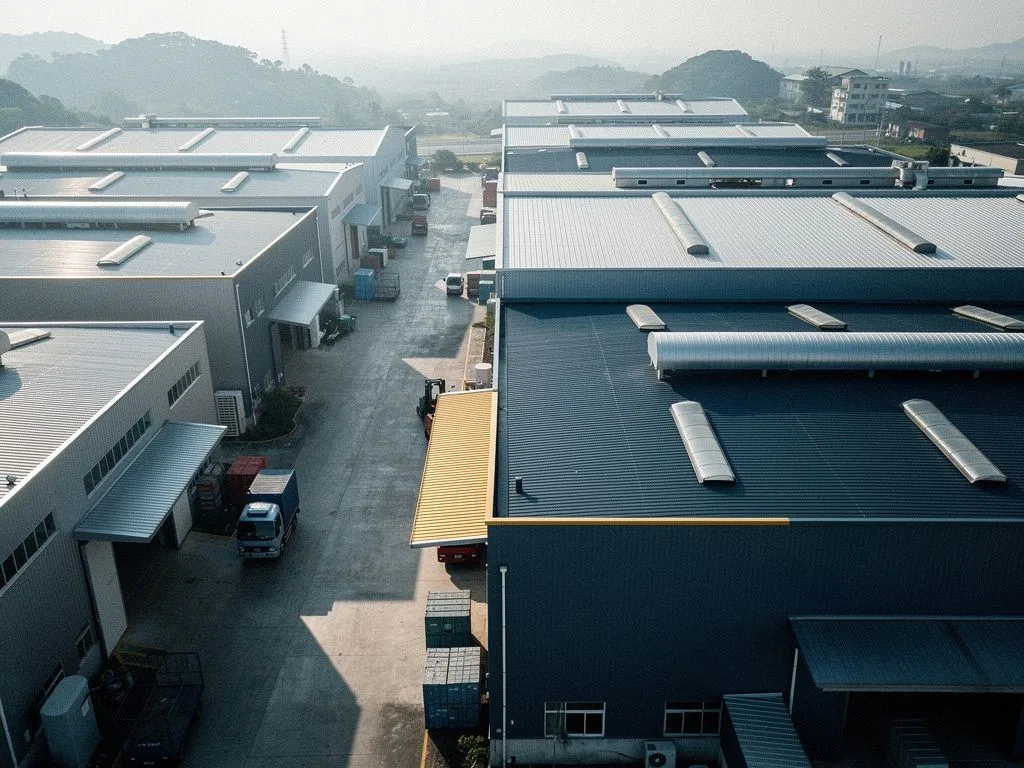
Located on the north side of Taichung City, Tanzih District sits close to the precision machinery industry cluster and the Central Taiwan Science Park, making it one of the administrative districts with the highest density of CNC metal machining in Taiwan. For B2B buyers, the value here lies in "short-chain supply": factories handling turning, milling, mill-turn, and Swiss-type sliding-head processes are within a 10- to 20-minute drive of one another, with raw material, surface treatment, and heat treatment suppliers also nearby. When OEM procurement needs to source multiple processes at once, or Tier-1 suppliers need to quickly coordinate prototyping and mass production, Tanzih's geographic concentration directly shortens lead times and communication costs.
Key Takeaways

  • Tanzi is a core short-chain supply hub

    Tanzi District is one of the administrative districts in Taiwan with the highest density of CNC metalworking operations. Factories for turning, milling, mill-turn, and Swiss-type sliding headstock processes are only 10 to 20 minutes apart by car, with raw material and post-processing subcontractors also nearby, directly shortening lead times and communication costs.

  • The cluster stems from three historical factors

    Taiwan's machine tool industry has been rooted in Taichung since the 1970s. The Central Taiwan Science Park (CTSP) established in 2003 drove demand, and Tanzi's proximity to the Taichung Industrial Park and the surface treatment and heat treatment clusters in Shengang and Fengyuan formed an internal loop of 'machine tool manufacturers—processing plants—subcontractors.'

  • Six characteristics form the ecosystem

    Concentrated process diversity, fast raw material access (1 to 3 working days), dense post-processing subcontracting, proximity to machine tool manufacturers, ample talent and technical support, and alignment with the CTSP industrial chain are key for buyers to assess the depth of a supplier ecosystem.

  • Cluster advantages must be verified across three dimensions

    Buyers should verify whether a supplier truly possesses cluster advantages by examining the equipment brand mix (e.g., BROTHER, Star, MAZAK), material inventory and subcontractor lists, and the completeness of inspection processes (incoming, in-process, and pre-shipment).

Why did a CNC machining cluster form in Tanzih rather than being dispersed across other regions?

The formation of Tanzih's CNC machining cluster results from the layering of three historical factors. First, Taiwan's machine tool industry established its foundation in the Shengang, Tanzih, and Fengyuan areas of Taichung starting in the 1970s, with machine tool builders and component suppliers taking root there, creating an internal loop of "machine builder—machining shop—subcontractor." Second, after the Central Taiwan Science Park was established in Taichung in 2003, optoelectronics, semiconductor, and precision equipment manufacturers moved in, driving demand for surrounding CNC machining. Third, Tanzih itself is a district within Taichung City, adjacent to the Taichung Industrial Park and the surface treatment and heat treatment clusters in Shengang and Fengyuan, keeping raw material and post-processing costs low. For buyers, understanding this cluster structure helps assess a supplier's "ecosystem depth"—the more subcontracting resources a single factory can mobilize, the lower the project risk. Yuan Shun Li is located in Tanzih and is part of this cluster, able to access support for turning, milling, mill-turn, and Swiss-type sliding-head processes nearby.

Six characteristics of the Tanzih supply chain that create value for buyers

  • Concentrated process diversity

    Suppliers of different CNC processes—turning, milling, mill-turn, Swiss-type sliding-head, and five-axis machining—are clustered together, allowing buyers to complete multi-process RFQs and sampling within a single geographic area.

  • Fast raw material access

    Suppliers of bar stock and plate in aluminum alloys, stainless steel, carbon steel, brass, and copper are near Tanzih, with material lead times typically compressible to 1 to 3 working days.

  • Dense post-processing support

    Anodizing, zinc plating, passivation, heat treatment, and other surface and heat treatment facilities are concentrated in the Taichung Industrial Park and Shengang, shortening the handoff time after machining.

  • Proximity to machine tool builders

    Taiwanese agents and service points for equipment brands such as BROTHER and TAKISAWA are mostly located in Taichung, ensuring fast response for equipment maintenance and tool calibration.

  • Adequate talent and technical support

    Taichung is near several technical colleges and precision machinery training institutions, providing a stable supply of CNC technical manpower—critical for buyers planning long-term mass production.

  • Integration with the Central Taiwan Science Park industry chain

    Optoelectronics, semiconductor, and precision equipment manufacturers in the Central Taiwan Science Park are the main customer base, and machining shops are familiar with their quality requirements and delivery rhythms.

How should buyers verify whether a Tanzih supplier truly has cluster advantages?

Cluster advantages do not automatically apply just because a supplier's address is in Tanzih; buyers need to verify from three aspects. First, look at the equipment brand mix: a factory that can simultaneously configure equipment with different positioning, such as BROTHER, Star Swiss-type sliding-head machines, and TAKISAWA, typically indicates capital investment and process coverage depth, rather than a small machining shop with a single machine type. Second, look at material inventory and the subcontractor list: a factory that can clearly state the grades and supply sources of commonly used aluminum alloys, stainless steel, carbon steel, brass, and copper, as well as the locations of post-processing subcontractors, is one where the collaboration chain is genuinely short. Third, look at the completeness of the inspection process: whether the three-stage process of incoming inspection, in-process inspection, and final pre-shipment inspection is implemented is an indicator of a factory's mass-production discipline. Yuan Shun Li has specific configurations in all three aspects, and buyers can verify this directly through the RFQ process.

taichung cluster scene 1

How does the supply chain structure in Tanzih practically benefit prototyping development teams?

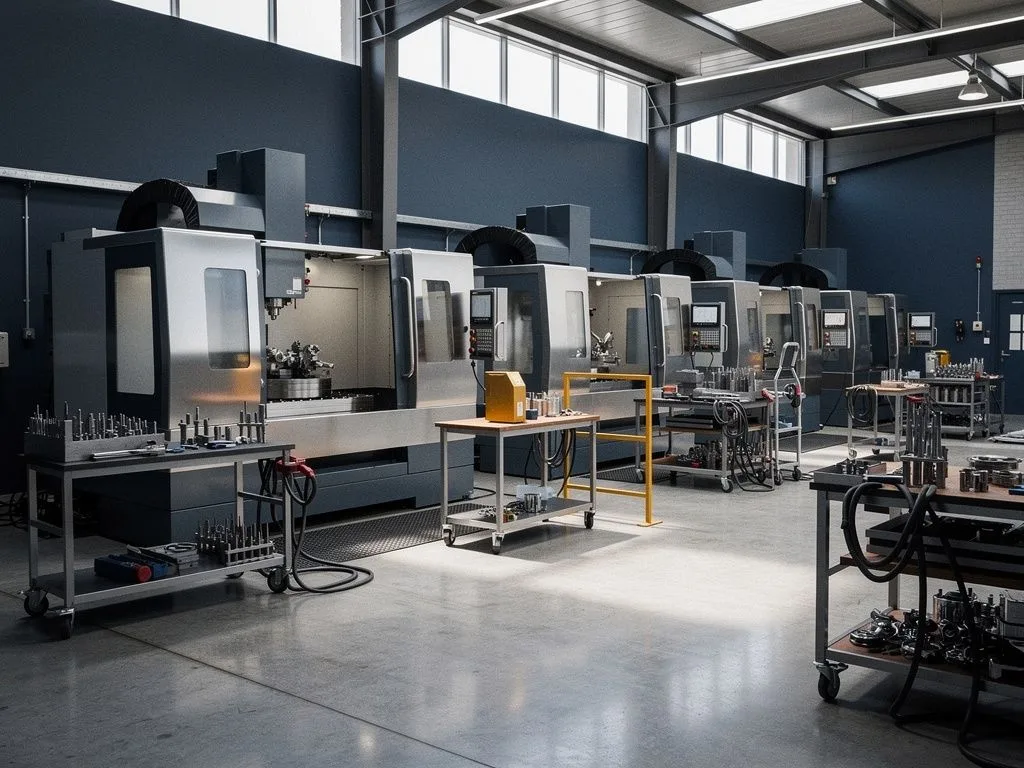
For prototyping development teams, the primary concern is not unit price but the time from drawing to sample. The supply chain structure in Tanzih offers three specific advantages in this regard. First, the concentration of multiple processes allows teams to avoid sourcing separate factories for different part features (deep holes, thin walls, complex surfaces) and complete all sampling within the same cluster. Second, the high density of Swiss-type lathes and CNC turning-milling machines in Tanzih provides more prototyping resources for small precision shaft parts (e.g., stainless steel shafts with an outer diameter of 10mm or less). Third, client engineers from the nearby Central Taiwan Science Park and Taichung Industrial Park can visit factories in person for on-site dimensional verification, shortening the communication loop during the prototyping phase. For OEMs and Tier-1 suppliers, this means the design-manufacturing-verification cycle during prototyping can be compressed to a few days, rather than the traditional two to three weeks required for cross-city coordination.
What risks and buffers does the Tanzih cluster bring to supply stability during mass production?

The double-edged nature of a highly concentrated cluster is that if a single factory encounters problems, the entire supply chain may be affected; conversely, alternative suppliers are also within the same cluster, making order transfer costs low. For buyers in the mass production phase, the real risk is not whether Tanzih will have issues, but whether your supplier has established a second source. There are three ways to assess this: first, ask whether the supplier has backup partners outside Tanzih; second, confirm whether key processes (such as Swiss-type lathes and turning-milling) have alternative capacity with the same or equivalent equipment; third, require the supplier to explain the response time when the main machine fails. Yuan Shun Li's equipment configuration includes different brands such as BROTHER, Star, and TAKISAWA, which inherently provides a certain degree of machine substitution flexibility, but specific backup plans still need to be confirmed based on the actual production line configuration.

taichung cluster scene 2

What practical impacts does the geographic location have on overseas buyers cooperating with Tanzih suppliers?

For overseas buyers, the impact of Tanzih's geographic location mainly falls into three aspects. First, time zone: Taichung is in GMT+8, with a 6 to 13-hour time difference from buyers in Europe and America, and only a 0 to 1-hour difference from Southeast Asian buyers, which directly determines the daily communication windows. Second, logistics: Tanzih is about a 30 to 40-minute drive from Taichung Port and about 1.5 to 2 hours from Taoyuan International Airport, with mature export routes for both sea and air freight. Third, factory audit convenience: if overseas buyers arrange Asian factory tours, they can schedule visits to Tanzih, the Central Taiwan Science Park, Taichung Industrial Park, and Shengang suppliers on the same day, making audits highly efficient. Understanding these geographic characteristics helps buyers clarify the delivery calculation basis (FOB Taichung Port vs. FOB buyer's port) and audit frequency arrangements in contracts.

What quality level does ISO 9001:2015 represent in the Tanzih cluster?

ISO 9001:2015 is a basic quality management system certification, and in the Tanzih CNC machining cluster, almost all established factories have obtained it. For buyers, ISO 9001:2015 itself is not a differentiating indicator but an entry ticket—factories without this certificate typically indicate that their scale or systems are not yet mature. The real difference in quality level lies in the actual execution behind the certificate: whether incoming inspection verifies material grades and specifications batch by batch, whether in-process checks implement first-article and patrol inspections, and whether final outgoing inspection uses equipment such as CMM or coordinate measuring machines. Yuan Shun Li has an ISO 9001:2015 quality management system, with inspection processes covering incoming, in-process, and outgoing stages, but the specific certificate number, validity period; measuring equipment details are available on request.

FAQ

What practical benefits does the Tanzi cluster offer for prototyping and development?

Prototyping teams care most about the time from drawing to sample. Tanzi's concentrated processes allow all sampling to be completed within the same cluster. The high density of Swiss-type sliding headstock machines and mill-turn centers provides ample resources for small precision shaft prototyping. With proximity to the CTSP and Taichung Industrial Park, client engineers can visit factories in person to confirm dimensions, compressing the prototyping cycle to just a few days.

What risks and buffers exist in the Tanzi cluster during mass production?

The high concentration of the cluster means a single factory's issue could affect the entire supply chain, but alternative suppliers are also within the same cluster, lowering switching costs. The real risk is whether a supplier has established second sources, which can be assessed by checking for backup subcontractors, equivalent alternative capacity for critical processes, and response time for major machine breakdowns.

How does geography affect overseas buyers working with Tanzi suppliers?

Taichung is in GMT+8, with a 6 to 13-hour time difference from European and American buyers and only 0 to 1 hour from Southeast Asia, determining daily communication windows. Tanzi is about 30 to 40 minutes by car from Taichung Port and 1.5 to 2 hours from Taoyuan Airport, with mature sea and air export routes. Factory audits can be arranged in a single day together with subcontractors in the CTSP, Taichung Industrial Park, and Shengang.

What quality level does ISO 9001:2015 represent in Tanzi?

ISO 9001:2015 certification is held by nearly all established factories in Tanzi; it is not a differentiator but an entry ticket. The real quality difference lies in the actual implementation behind the certificate: whether incoming inspection verifies material grades batch by batch, whether first-article and patrol inspections are carried out during production, and whether CMM or coordinate measuring machines are used before shipment.

How can one determine whether a Tanzi supplier truly has cluster advantages?

Cluster advantages are not automatically established just because a supplier is located in Tanzi. First, look at the equipment brand mix: the ability to configure different positioning equipment such as BROTHER, Star Swiss-type sliding headstock machines, and MAZAK indicates capital investment and process coverage depth. Second, check material inventory and subcontractor lists: suppliers should clearly state material grades and supply sources. Third, verify whether inspection processes implement the three-stage approach of incoming, in-process, and pre-shipment.

Need to Evaluate a CNC Machining Supplier in Tanzi?

Provide your part drawings, materials, batch size, and delivery requirements, and Yuan Shun Li will confirm process feasibility and provide a quotation based on actual specifications.